
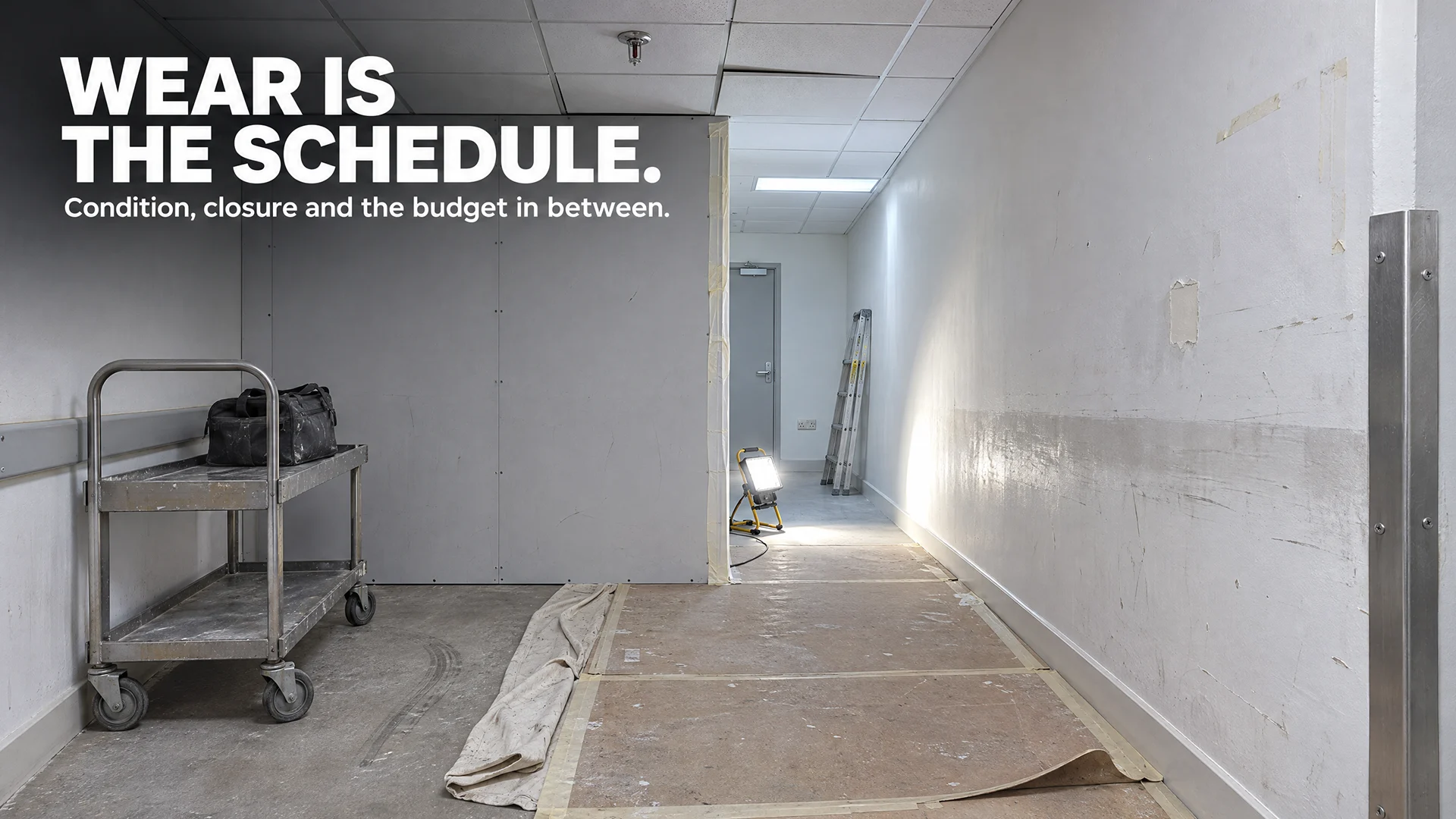

Every year a facility manager has to decide how much painting to put into next year’s budget. The obvious answer is to use an interval, such as a five-year allowance for an office floor. The first walk usually complicates that plan. The reception wall looks tired after several years of deliveries. Conference rooms painted on the same day can go longer. The budget works best when it can respond to both observations.
A commercial building repainting schedule can start with a multi-year planning horizon. Use condition, occupancy and upcoming changes to decide which projects actually enter that schedule.
Group walls by what happens around them
Walk the building with the facilities team and give each type of space its own inspection route. Choose representative walls and any known trouble spots. Record the same observations each time so the team can tell whether wear is spreading or simply becoming more visible under a different light.
| Space | What to inspect first | Opportunity to schedule work |
|---|---|---|
| Hotel corridor | Trolley routes, corners and room entrances | Low occupancy, with part of the floor available to isolate |
| Office | Reception, shared circulation and repaired partition walls | A planned closure, phased floor release or lease turnover |
| Healthcare space | High-touch walls and areas with repeated cleaning | A closure agreed with facilities and infection prevention |
| Warehouse | Impact-prone walls, service areas and occupied offices | An agreed operating gap with access and protection in place |
A quieter wall can stay on the inspection list while a heavily used zone moves forward. The age of the coating is useful context. The room’s condition and access determine when the crew can act.
Move the right work into the budget
Log where marks occur, what they look like and whether previous cleaning or repairs lasted. Scuffing and sheen loss can make a wall look due for repainting. Flaking or recurrent moisture staining calls for a closer look at the substrate and source before allocating paint. If a cleaned test patch looks acceptable, use that finding to keep the scope focused. Sherwin-Williams interior troubleshooting
Keep an estimate for the planned touch-ups and recoating and a separate line for investigations or repairs that could change the scope. As areas come due, add updated quantities and access costs. A five-year view helps buy work in manageable packages. The next budget should still reflect what the current condition walk uncovered. When commercial buildings need repainting
For example, an office manager might put reception in this year’s budget, tentatively reserve work for two corridors next year and keep meeting rooms on the watch list. Add a reason and a review date to each entry. If the tenant chooses to refurbish the two corridors early, the team can combine the work. If the next inspection shows the coating is still sound, the estimate can stay in the plan and the closure can move back.
Budget for the full time a zone is unavailable
A hotel with a corridor due for paint needs to know which rooms it can sell, which routes stay usable and when the zone can return to service. List the time for protection, preparation, coats, drying, ventilation, cleaning and inspection. Confirm how the building will handle delays before committing to an overnight slot.
Use the approved coating and agree on any requirements for isolating the area and managing air while the work is underway. Ventilation and reopening depend on the conditions and plan for the site. A quiet work window is easier to coordinate when facilities, operations and the contractor agree on who has authority to release it. EPA building air quality guidance
Carry work forward when the condition allows it
At the next budget meeting, bring three dates for each area: the last inspection, the next decision and the earliest time the space can close. A floor in good condition can keep its review date even if the repaint is deferred. A worn entrance can move ahead when there is a compatible closure. Give the new date to the people who control the building calendar so they can plan around it.
When an area keeps returning to the top of the list, look at its history. A hotel may be repainting the same wall after housekeeping carts scrape a tight corner. Compare the cost and disruption of repeat painting with an approved change to the protection or route. The next repaint budget can then carry a clear allowance for the area, and the following inspection can show whether the change made a difference.
Use a measured trial to improve next year’s estimate
On suitable walls in an isolated group of rooms, facilities and the painting contractor can evaluate how MYRO fits into the repaint package. Record the area painted, the time the crew spent preparing and spraying, and the interval through final inspection. Include the surfaces that still need manual work so the estimate reflects the whole zone.
After the job, update the register with the product, acceptance date and any relevant quality readings. Note whether the closure was longer or shorter than expected. If a new protection detail was installed along a trolley route, check it on the next walk to see whether the repaint held up there.
That history gives planning meetings a better starting point than the date of the last coat. The manager can explain why one corridor needs funds this year, why another can wait and how much of the building will be out of service when the work starts.