
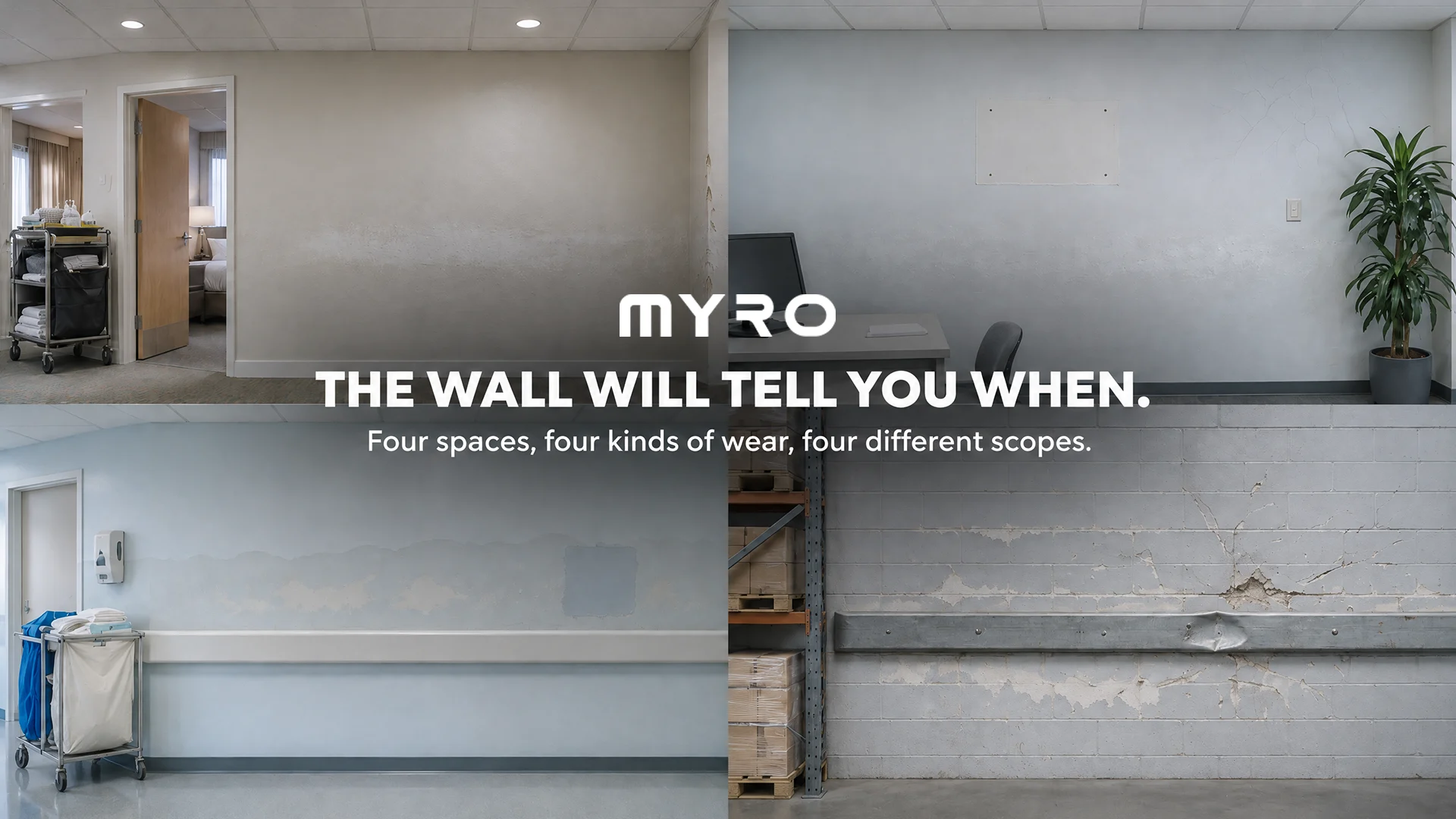

The walls in a five-year-old office can be in better shape than the walls in a hotel corridor that opened last year. The office has little traffic and the same tenant. The hotel moves housekeeping carts down the corridor every day. The useful question is what happened to the coating and what the building needs next.
Commercial buildings tend to need paint at three points: when new surfaces are ready to finish, when inspection shows the existing coating has worn or failed, and when a change in use makes a different finish necessary. Each calls for a different plan, even when the owner is choosing the same colour.
On a new build, paint when the wall is ready to receive it
Interior paint follows the relevant rough-ins, wall repairs and substrate finishing. Get the painting lead and main contractor to look at the area together. Confirm work inside the wall is complete as required, the substrate has reached the specified condition and the area can be kept clean while the coating dries. A room release is a useful record of which issues were checked and who accepted them.
Primer and topcoat are part of the specified system. A wall with bare joint compound, plaster repairs or uncoated concrete may need different preparation before the final paint goes on. Check the approved products and their instructions. Painting a room early can give the programme a tick today and leave the crew responsible for damage from the next trade tomorrow. Sherwin-Williams professional preparation guidance
During operation, inspect the location and the pattern
A few scuffs behind chairs may respond to the facility’s approved cleaning method. A long band of wear along a service corridor may justify a section repaint. Where paint is flaking, blistering or repeatedly stained, the first step is to establish what is happening beneath or behind the finish.
| What you see | What to check before planning the work |
|---|---|
| Marks at chair or trolley height | Whether cleaning restores the finish and whether protection would reduce repeat damage |
| Colour change near glazing | Whether a test area shows fading, dirt or a sheen difference in the existing finish |
| Loose paint, blisters or recurring stains | Moisture sources, coating adhesion and the condition of the substrate |
| A crack that keeps returning | Whether the underlying movement or repair needs review before refinishing |
Treat the table as a way to organise an inspection. Record where the problem starts and ends, and compare a worn area with a nearby wall that sees less use. A stain beneath a window can suggest a different investigation from paint rubbed away around a door handle. Sherwin-Williams interior troubleshooting guidance
At an entrance, for example, mark a scuffed corner, a recurring stain and a fading section as three separate observations. The scuff may go on the cleaning list, the stain may need a maintenance inspection and the faded section may need a sample repaint. Group the work once the causes and repair scopes are clearer. That gives the contractor a more accurate walk-through when pricing the repaint.
A change of use can bring painting forward
A tenant turnover may put new partitions where the old floor plan had open space. A hotel refurbishment may introduce a darker colour that makes previous wall repairs more visible. A healthcare operator may specify a finish compatible with its cleaning regime. Those are decisions about the area and its use, even if the existing paint still adheres.
Keep a short record of the finish chosen for each type of space. When a unit turns over, the site manager can check which walls can stay, which need patching and what must be recoated to meet the next occupant’s requirements. That is a more focused scope than treating every turnover as a full repaint.
Test how far a repair has to extend
Start with a representative wall if the finish is sound and the question is appearance. For example, when a reception sign is removed, the wall can show fixing holes, differences in colour and a clean rectangle where the sign sat. Patch and prepare a trial area using the agreed method, then look at it under the normal lights once it has dried enough for review. The facility manager can see whether a local repair blends or whether the wall needs to be finished to its nearest natural break.
Give recurring marks a separate work order. If a leak investigation is still open, set a date to review that wall after the repair and any required drying checks. Another room with ordinary wear can move into the painting schedule in the meantime. Splitting the decisions lets the contractor price the known area and helps the maintenance team avoid reopening a visible defect as soon as the building goes back into use.
Plan the return to service with the repaint
If a floor is in use, put the coating work, access and reopening on the same plan. Coordinate isolation, ventilation and the work window with building management. Allow for drying and any other release criteria that apply. In a hotel, for example, the facilities lead can put two vacant rooms and an isolated corridor segment on the first work order, then use the verified cleaning and release times to schedule the next group. EPA building air quality guidance
For MYRO, a candidate maintenance area is a series of suitable interior walls that the crew can prepare, protect and release together. The facility team can trial robotic spraying on those walls and keep detailed or confined areas under the appropriate manual method. Use the result to estimate how long each area will be unavailable. The team should be able to explain the whole window, from first protection to signed release, before the building relies on it.
Talk to MYRO about planning a commercial interior repaint trial.