

For decades, the logic of investing in painting businesses followed a clear pattern. Growth meant adding crews. Scale meant acquiring more equipment. Capacity was measured in gallons stored, spray rigs owned, and scaffolding available. The path forward was visible, tangible, and relatively straightforward to finance.
That model still exists. But it no longer tells the full story.
What’s changed isn’t the importance of equipment or materials; both remain essential. What’s changed is where operational risk actually lives in a modern painting business, and where durability is built.
The Traditional Asset Framework
Historically, painting contractors scaled through physical expansion. More trucks. More sprayers. Larger crews. The underlying assumption was that project execution would remain relatively consistent across jobs, and that adding capacity would translate directly into adding revenue.
This worked well when projects were smaller and more contained. A residential repaint. A single commercial facade. Jobs where one crew could maintain oversight from start to finish, where timelines were measured in days rather than weeks, and where coordination demands were manageable.
The assets themselves became proxies for capability. An investor evaluating a painting business could walk through a warehouse, count equipment, review crew size, and form a reasonable picture of operational capacity.
Where Complexity Actually Lives
As painting projects have grown in scope and scale, the operational challenge has shifted beneath the surface.
Large commercial sites now involve multiple crews working across different zones simultaneously. Timelines stretch across months, with dependencies between trades that require precise sequencing. Quality standards have tightened. Client expectations around documentation, safety protocols, and schedule adherence have increased significantly.
The limiting factor in these environments isn’t equipment availability. It’s coordination stability.
A contractor can own state-of-the-art spray systems and maintain a skilled crew roster, but still struggle with:
- Visibility into job progress across multiple active sites
- Consistent communication between field teams and project management
- Accurate material forecasting that prevents delays
- Repeatable processes that reduce execution variability
- Documentation systems that close accountability gaps
Equipment enables the work. But it doesn’t structure how the work gets done, how information flows, or how problems get surfaced before they cascade.
The Infrastructure Layer
What serious investors are beginning to recognise is that operational infrastructure, the systems that govern execution, increasingly determines whether a painting business can absorb complexity or whether complexity destabilises it.
This isn’t about technology for its own sake. It’s about whether a business has built repeatable processes for:
- Standardising how projects are scoped and estimated
- Tracking material usage and waste across jobs
- Monitoring schedule adherence in real time
- Ensuring quality checkpoints are actually completed
- Capturing field-level data that informs future planning
These systems don’t appear on a balance sheet the way equipment does. But they directly influence risk exposure, margin stability, and scalability.
A painting business with strong execution infrastructure can take on larger, more complex projects without proportionally increasing operational risk. The same business without that infrastructure often finds that growth introduces new failure points, missed timelines, budget overruns, and quality inconsistencies that erode profitability faster than revenue grows.
What Investors Are Evaluating Differently
The shift in how strategic investors assess painting businesses reflects this reality.
Traditional due diligence focused heavily on asset inventory and crew capacity. Those factors still matter. But increasingly, investors are asking deeper questions about operational maturity:
- How does the business maintain visibility across simultaneous projects?
- What processes exist to reduce execution variability?
- How quickly can the business identify and respond to problems in the field?
- What systems are in place to ensure quality standards are met consistently?
- How reliant is execution on individual relationships versus structured processes?
These questions point toward structural durability rather than just current capacity.
An asset-heavy painting business that lacks execution infrastructure carries hidden volatility. Growth may come, but it’s often accompanied by increased unpredictability. Margins fluctuate. Timelines slip. Client satisfaction becomes inconsistent.
Conversely, a business that has invested in strengthening its operational backbone, even if its physical asset base is leaner, demonstrates characteristics that institutional investors value: predictability, repeatability, and resilience under complexity.
Where Value Is Being Built
This doesn’t mean equipment and materials have become irrelevant. They remain foundational.
But competitive advantage in the painting industry is increasingly shaped by what sits beneath those visible assets. The workflows that prevent small issues from becoming large ones. The data capture that allows learning across projects. The coordination systems that keep multiple crews aligned without constant manual intervention.
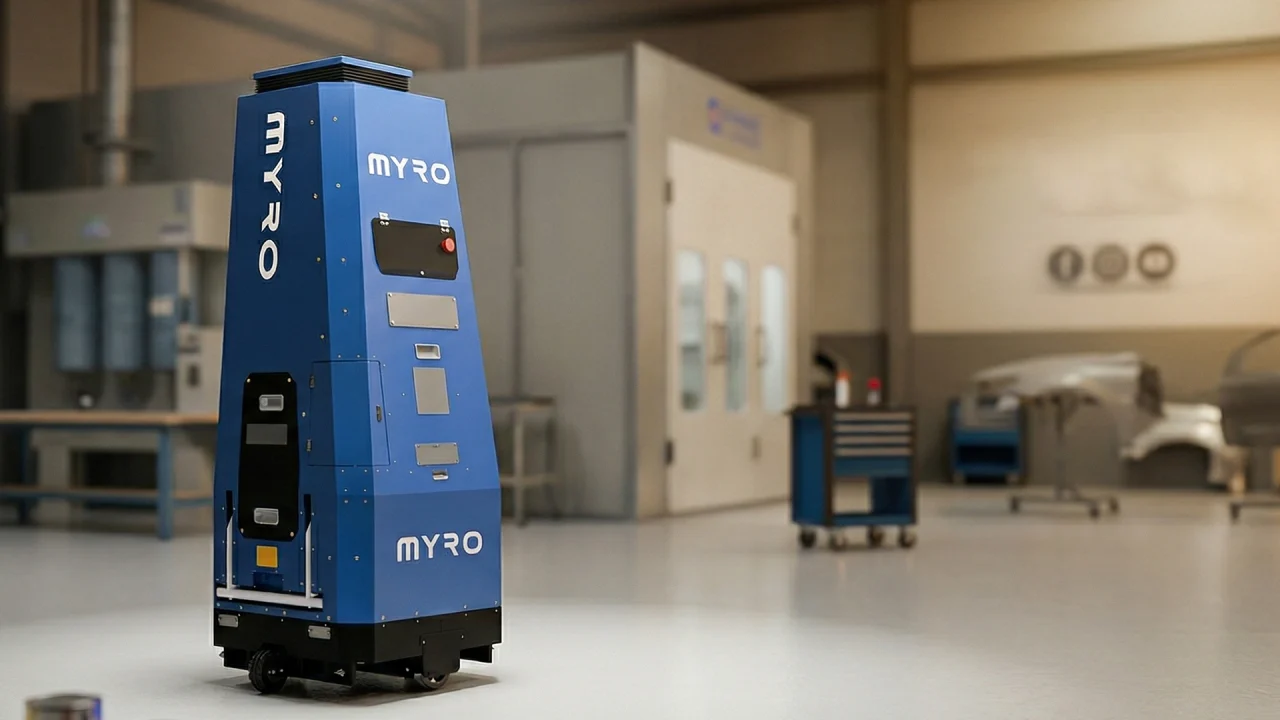
Companies like Myro have emerged within this operational infrastructure layer, focused not on replacing the physical work of painting but on strengthening the execution framework that makes complex painting projects manageable at scale.
The investment thesis here is straightforward: businesses that build operational discipline can absorb larger projects, reduce risk exposure, and create more durable competitive positions. Not because they own more equipment, but because they’ve structured how that equipment gets deployed.
The Longer View
What this represents is a maturation of how painting businesses are evaluated.
In earlier stages of industry development, growth and asset accumulation were closely linked. That linkage made sense when projects were simpler, and execution coordination was less demanding.
As project complexity has increased, the relationship between physical assets and operational stability has loosened. Equipment remains necessary. Skilled crews remain necessary. But neither guarantees execution control.
Strategic investors recognise this gap. They understand that capital deployed into execution systems, into building repeatable processes, improving visibility, and reducing variability, often generates more durable value than equivalent capital deployed into equipment expansion alone.
This isn’t a narrative about technology disrupting traditional painting. It’s a more fundamental observation: infrastructure matters. How work is coordinated, how information flows, and how quality is maintained are elements that shape whether a painting business can scale sustainably or whether it simply becomes larger and more chaotic.
The painting industry will always require excellent equipment and skilled labour. But the businesses that attract serious investment capital are increasingly those that have recognised where operational risk actually lives, and have built the systems to manage it.
That’s not a trend. It’s a structural shift in what defines a durable painting business.
LinkedIn Caption
For years, evaluating a painting business was simple. Count the trucks. Check the equipment. Review crew size. The assets told the story.
That model is no longer enough.
As painting projects have grown in scope - multiple crews across multiple zones, months-long timelines, tighter quality standards, more demanding clients - the real operational risk has moved somewhere that doesn’t show up on a balance sheet.
It lives in coordination gaps. In the absence of real-time visibility across active sites. In material forecasting that fails quietly until it causes a delay. In execution processes that depend on one person’s relationships rather than structured systems.
Equipment enables the work. It doesn’t structure how the work gets done.
The investors paying close attention to the painting industry right now aren’t just asking about asset inventory. They’re asking harder questions: How does this business maintain quality across simultaneous projects? How quickly does it identify problems in the field? How reliant is execution on individuals versus repeatable processes?
Those questions point to something more important than capacity. They point to durability.
The painting businesses that will attract serious long-term capital aren’t necessarily the ones with the most equipment. They’re the ones that have built the operational infrastructure to absorb complexity without breaking.
That’s the structural shift redefining what a valuable painting business actually looks like.
📖 Read the full breakdown → [website link]
X (Twitter) Caption
Counting trucks and equipment used to tell you everything about a painting business.
It doesn’t anymore.
As project complexity has grown, operational risk has quietly moved somewhere that doesn’t show up on a balance sheet - into coordination gaps, execution variability, and processes that depend on individuals instead of systems.
Smart investors are asking different questions now.
Here’s what they’re actually evaluating 👇 📖 [website link]