
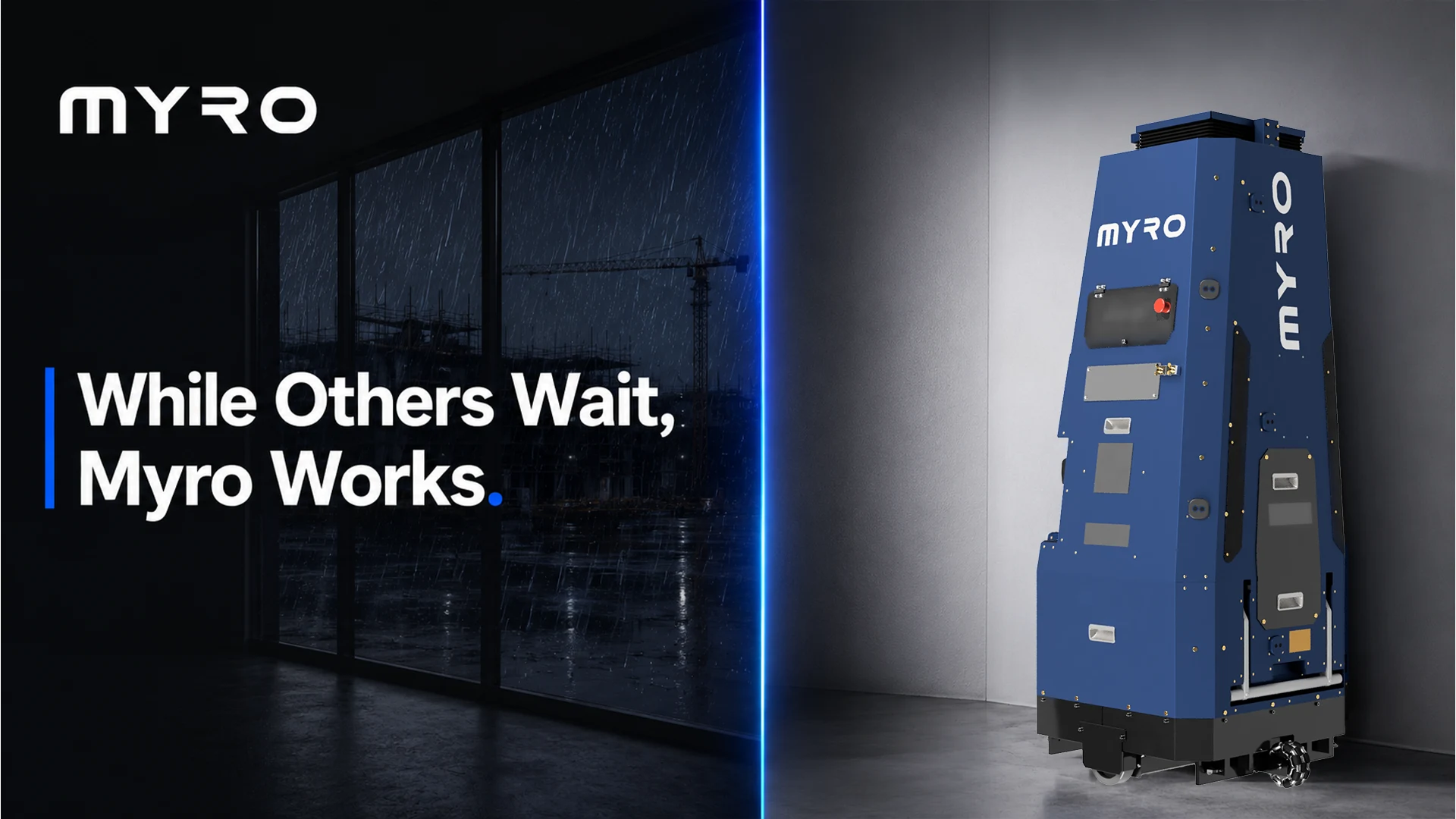

Anyone who has walked a major construction site in July knows the exact sound of a monsoon delay. It’s the sudden, heavy quiet. The tarps go up, the scaffolding empties, and the rhythmic noise of progress grinds to a halt. But while the physical site goes quiet, the financial clock only ticks louder.
For site managers and investors alike, the monsoon is universally accepted as a period of inevitable slowdown. We factor it into project timelines, cite it in quarterly reports as a natural delay, and treat it as a cost of doing business. But looking at the rains purely as a weather event misses the bigger, more systemic picture.
The monsoon is not just weather it is a margin stress-test. It strips away the illusion of operational efficiency and exposes the underlying fragility of traditional, manual-dependent construction systems. Here is why the industry needs to stop accepting seasonal downtime, and how automation is fundamentally shifting the way we manage project risk.
The True Cost of Idle Time
When the rains begin, progress stops, but capital burn does not. The true cost of the monsoon isn’t measured by the water on the ground; it is measured in the compounding cost of idle time.
Particularly for Tier-1 developers managing multi-tower projects across major construction hubs, every day a site sits idle represents locked capital and delayed returns. Project managers are left staring at Gantt charts, trying to manage programme slippage a risk that is often unpriced because traditional construction models have never had a viable solution to counter it. We have normalized stopping because, historically, we never had the tools to keep going.
Why Traditional Finishing Fails in the Damp
Finishing work, particularly painting and coating, is notoriously vulnerable to environmental shifts. Traditional manual painting relies entirely on the physical environment cooperating with the human hand.
When humidity spikes during the monsoon, the physics of paint application change. High moisture levels severely affect viscosity, drying times, and surface adherence. If manual crews attempt to push through the damp conditions to meet deadlines, the result is almost always compromised quality. This leads to peeling, blistering, and a frustrating, costly cycle of rework once the weather finally clears.
The structural problem here isn’t the rain. It is our continued reliance on a manual process that demands perfect weather conditions to deliver acceptable results.
Changing Execution with Automation
This is where construction-tech and robotics step in to change the reality on the ground. Automation fundamentally alters project execution by decoupling progress from environmental unpredictability.
Robotic systems don’t operate on fatigue, guesswork, or the hope that the weather will hold. They are governed by data, sensors, and programmed parameters. When deployed in sheltered or interior environments during adverse weather, automated systems do not need to slow down. They adjust to their environment, optimizing the flow rate and application speed to match ambient data in real-time. By removing the human variables associated with difficult working conditions, automation ensures that execution continues smoothly, safely, and accurately.
The Power of Predictability at Scale
For infrastructure companies and large-scale developers, execution is only valuable if it is scalable. A five percent drop in productivity on a single floor might be a headache; a five percent drop across a 40-story high-rise over a three-month rainy season is a massive financial liability.
Consistency is the ultimate currency at scale. Automated finishing ensures that the final micron of paint applied on day ninety is mathematically identical to the first micron applied on day one, regardless of the humidity index outside. This level of predictability protects project margins and allows developers to forecast completion dates with certainty, rather than hopeful estimations.
How Myro Operates While Others Wait
Myro was engineered specifically to eliminate the operational drift that plagues traditional construction. While manual finishing crews are forced to wait out the weather, Myro’s robotic finishing systems do not take the monsoon off.
Myro consistently maintains perfect application parameters regardless of ambient moisture. It doesn’t just automate the painting process; it standardizes it against the elements. By maintaining continuous operation when manual teams cannot, Myro effectively reclaims the lost hours of the “idle-time economy.” For builders and investors, this is not just a marginal advantage on a single site it is a structural shift in how construction risk is managed, mitigated, and ultimately eliminated.
The Future of Building
The narrative of the modern construction site is evolving. The companies that will lead the next decade of real estate development are no longer the ones who build the largest manual workforces to throw at structural problems. They are the ones quietly building intelligent systems underneath their operations.
The future of construction belongs to those who recognize that weather delays are no longer an unavoidable act of nature. They are an engineering problem. And with smart automation, it is a problem we are finally equipped to solve.