
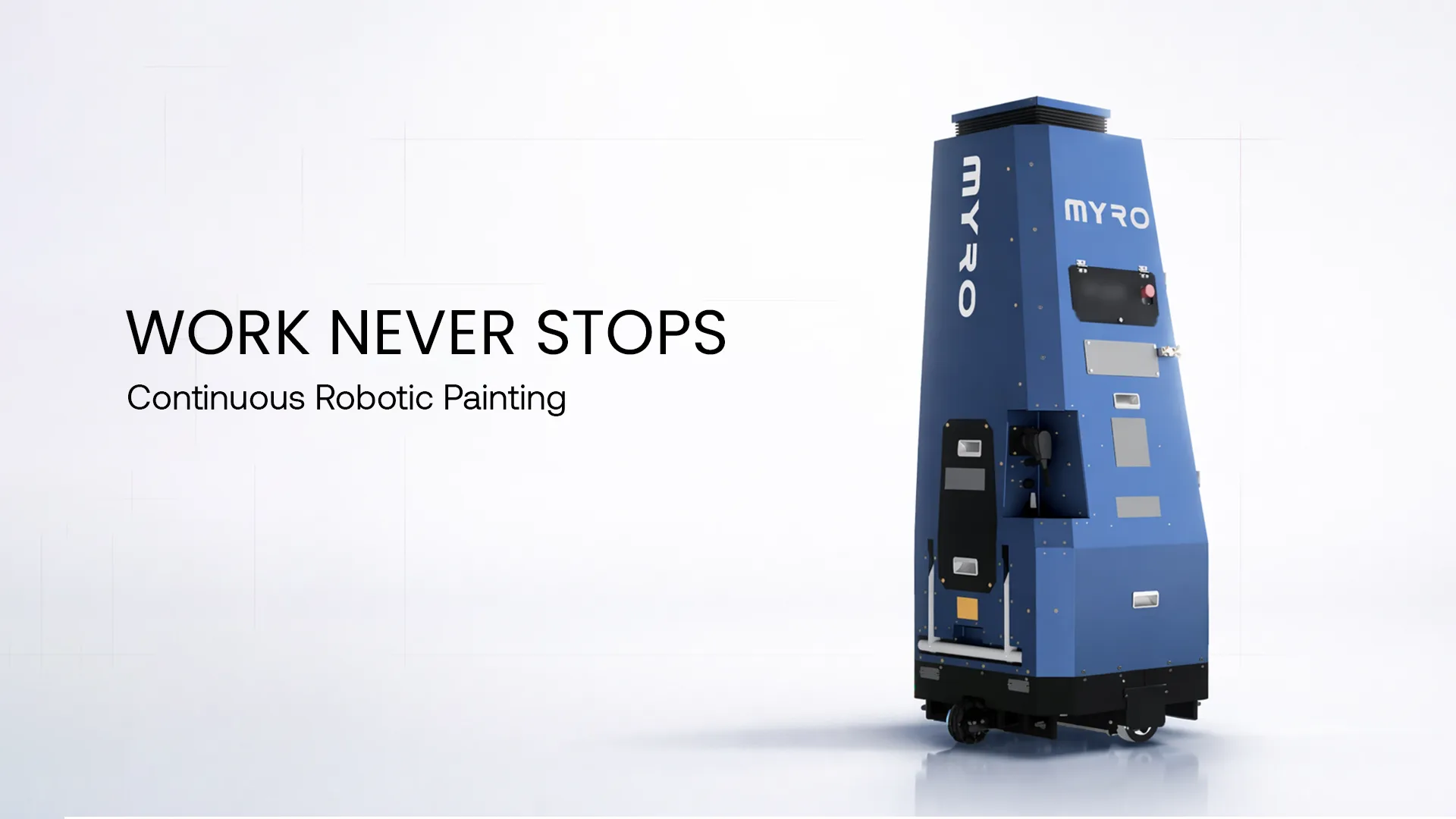

The construction industry has long operated on the assumption that complexity is inevitable. A growing number of leaders are beginning to question whether that complexity was ever the nature of the work, or simply the result of how it was organised. Now there is uncertainty in labour, so machines are a stable solution.
The Problem: An Industry Built on Unpredictable Efficiency.
Construction is one of the largest industries in the global economy, yet it remains among the least productive. Output per worker has improved only marginally over decades, a striking contrast to manufacturing, logistics, and virtually every sector that has undergone systematic operational reform.
The reasons are familiar to anyone who has worked near a major project. Fragmented supply chains. Inconsistent labour quality. Weather-related stoppages. Design changes mid-execution. Each introduces a delay. Each delay compounds the cost. The result is a structural pattern of overruns that has become so normalised that it is now priced into expectations before a single foundation is laid.
This is not simply a management problem. It reflects the limits of a system that relies heavily on manual coordination, tacit knowledge, and processes that resist standardisation by design.
The Pressure: Demand Is Accelerating But Supply Is Uncertain
Global infrastructure demand is at a level that traditional construction systems were never designed to meet. Urbanisation continues at a pace. Housing shortfalls are widening. Ageing infrastructure requires replacement at scale. And the urgency around climate-adaptive building is creating a new category of structural need entirely.
Against this backdrop, the industry’s current execution model faces a fundamental tension: the scale of what needs to be built cannot be matched by the rate at which it can currently be delivered.
Labour markets are tightening. Experienced tradespeople are retiring faster than they are being replaced. The assumption that skilled labour will always be available on time, at cost, and at the required quality is one that fewer project teams can continue to rely on.
What emerges is a delivery gap. Not a temporary one. A structural one.
“The question is no longer whether construction needs to change. The question is which organisations will lead that change, and which will be shaped by it.”
The Risk: Safety, Consistency, and the Cost of Human Error
Construction remains one of the most hazardous sectors of any economy. Injury rates are disproportionately high relative to comparable industries. The human cost is serious. The regulatory, legal, and reputational exposure for operators is growing accordingly.
But risk in construction extends beyond site safety. Inconsistency of output is its own category of exposure. When quality depends on the individual competencies of a workforce that varies in experience, training, and daily condition, predictability becomes impossible to guarantee. Rework, the correction of errors discovered after the fact, is a reliable indicator that consistency was not built into the process. It was left to chance.
Every rework event represents not just direct cost, but schedule compression, resource reallocation, and eroded client confidence. In high-volume or high-stakes projects, this compounds quickly.
The Shift: From Craft to System
The most significant shift underway in construction is not technological in origin; it is philosophical. It is the recognition that building at scale, with consistency, demands systems thinking rather than craft thinking.
Craft-based construction is inherently variable. Each project is treated as a unique event. Knowledge accumulates in people, not in processes. Outcomes depend on who shows up, not on how the system is designed. This approach has produced remarkable structures, but it does not scale. It does not adapt gracefully to labour shortages. And it does not reduce in cost over time the way industrial processes do.
Structured execution encodes the process. The output is repeatable because the method is repeatable. Quality is built in at the system level, not dependent on individual performance. The more the process runs, the more it can be refined. Cost and time compress as the system matures.
This is how every other major industry evolved: automotive, aerospace, logistics, electronics. Construction is arriving at the same inflexion point. Later than most, but with significant momentum.
The Opportunity: Automation as Infrastructure Intelligence
Emerging systems in construction automation are not simply replacing manual tasks. They are restructuring how information flows through a project, from design intent to physical output, with a precision that manual processes cannot replicate.
The value proposition is multi-layered:
- Speed increases because the system does not fatigue, pause for coordination delays, or wait on decisions that should have been encoded in advance.
- Consistency improves because the output reflects the instruction set, not the interpretation of it.
- Safety exposure decreases as fewer personnel occupy high-risk positions on site.
- Cost, over time and at scale, compresses in ways that conventional labour-intensive models fundamentally cannot match.
Critically, these systems generate data. Every action, every measurement, every output becomes a structured data point. That data enables feedback loops that manual construction never had access to. Projects become learning systems. Organisations accumulate operational intelligence in a transferable form, not embedded in the memory of experienced individuals, but encoded in systems that can be deployed, replicated, and continuously improved.
This is what intelligent construction looks like. Not a single dramatic innovation, but a compounding advantage built through structured, data-driven execution at scale.
The Market: Why Capital Is Moving, and Why Timing Matters
The investment case for construction automation is increasingly well-supported, not by optimism, but by structural necessity. The sector cannot meet its demand obligations through existing methods. The labour market will not relieve that pressure. Regulatory and safety expectations will tighten. And the financial performance of traditional construction, chronically margin-compressed, perpetually exposed to overruns, does not attract the capital it needs in its current form.
Automation changes this calculus. It introduces predictability into a sector defined by its absence. It enables scalability that individual labour supply cannot provide. And it repositions the cost structure of construction in a way that makes the economics compelling, particularly for operators and developers working at volume or under serious timeline pressure.
The window for early positioning in this transition is real and finite. Industries in structural transformation tend to concentrate value among early movers, those who embed the new system before it becomes the standard expectation. Construction is at that stage now. The organisations treating automation as a future consideration are already behind those treating it as a present deployment.
The Outlook: The Next Phase Is Already in Motion
Construction has resisted transformation longer than most industries. Its complexity, its site-specific variability, its dependence on local labour and local knowledge all of these created genuine barriers to the kind of systematic reinvention that other sectors underwent decades ago.
But barriers are not permanent. They are delayed.
The conditions that made transformation difficult have not disappeared. They have been joined by conditions that make transformation necessary. The demand gap is real. The labour gap is real. Safety and consistency expectations are rising. Economic pressure on traditional models is intensifying from every direction simultaneously.
Structured, automated, precision-led building systems are not a vision for what construction could become. They are the logical response to what construction currently is and what it needs to be. The leaders who understand this are not making speculative bets. They are reading the structural evidence and positioning accordingly.
The industry will be transformed. The only strategic question remaining is whether an organisation will be part of shaping that transformation, or simply subject to it.
Global Infrastructure Intelligence · Strategic Commentary Series · All analysis reflects generalised industry trends and does not constitute financial or investment advice.