

Introduction
Painting may be the last step in construction, but it’s often the stage that brings some of the biggest challenges. Traditional building painting is prone to inconsistencies, delays, waste, and quality issues - problems that can quickly escalate into costly setbacks.
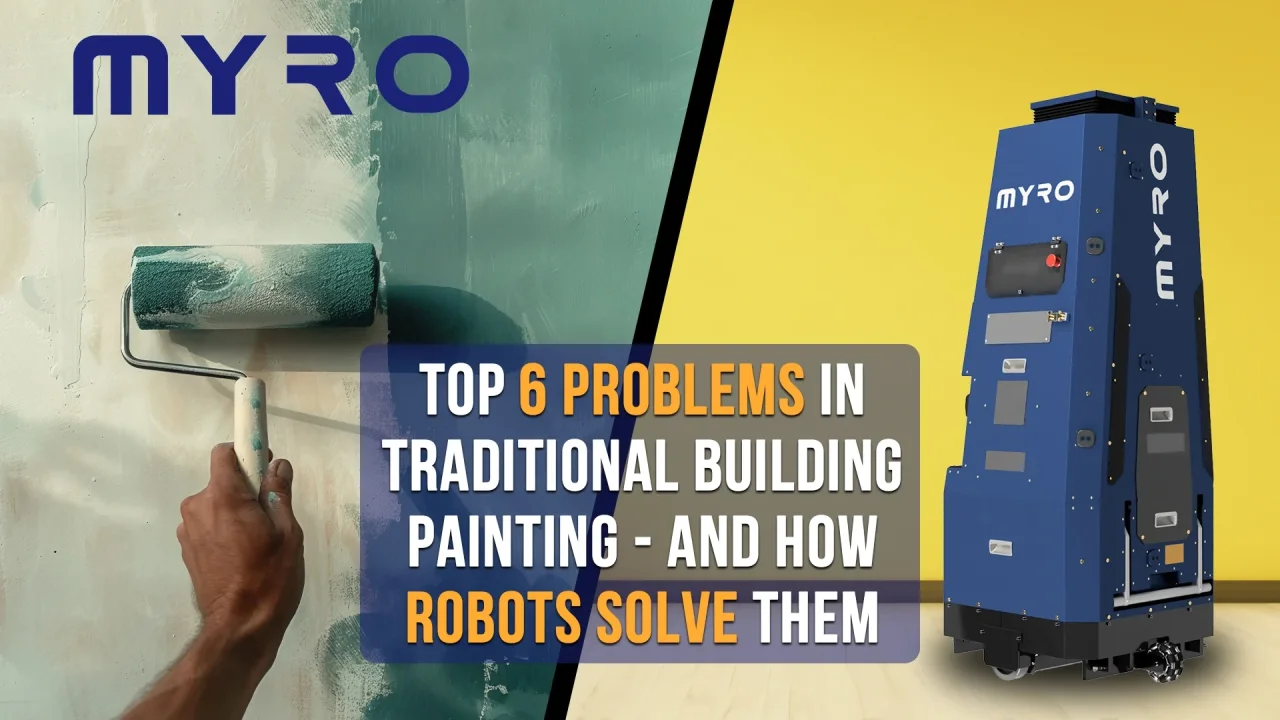
Robotic painting technology is changing this. By combining automation, precision control, and intelligent monitoring, robots transform painting from a labour-intensive, unpredictable process into a faster, cleaner, and more consistent operation. Among these, MYRO stands out with advanced AI-driven scanning, precise spray systems, and sustainable paint application methods - delivering measurable improvements on every project.
1. Inconsistent Quality
The Problem: Different painters produce varying results, with differences in coverage, texture, and colour uniformity - especially across large or complex projects.
How Robots Solve It: Robotic painters maintain a steady spray pattern, optimal nozzle distance, and even pressure - ensuring every wall receives the same coverage and finish.
MYRO uses precision spray calibration to apply paint with millimetre precision, eliminating streaks, patchiness, and colour variations. This means architects, developers, and contractors get finishes that meet the same standard across entire projects, from the first room to the last.
2. High Rework Rates
The Problem: Missed spots, uneven coats, and overapplication necessitate rework, which wastes time and money.
How Robots Solve It: Automation reduces the human errors that cause missed spots or uneven coats, cutting down on costly and time-consuming rework. The result is a dramatic drop in rework, freeing up schedules and resources for other critical tasks.
3. Excessive Material Waste
The Problem: Manual methods often result in overspray, spillage, and inefficient use of paint, leading to increased costs and environmental impact.
How Robots Solve It: Intelligent control systems calculate and apply only the exact amount of paint needed, reducing overspray and spillage. MYRO’s intelligent paint flow control minimises waste while also lowering VOC emissions for better environmental compliance. This not only saves money on materials but also supports sustainability goals and green building certifications.
4. Slow Project Timelines
The Problem: Manual crews are limited by fatigue, shift hours, and varying productivity, resulting in painting being a common bottleneck.
How Robots Solve It: Robots maintain consistent, high-speed performance for extended hours without fatigue, accelerating the painting phase. MYRO operates at an optimised pace that keeps painting on schedule, even in fast-track projects. This reliability helps prevent painting from becoming a bottleneck, keeping the entire build on track.
5. Uneven Drying and Finish Mismatch
The Problem: Uneven application thickness causes certain areas to dry faster or slower, leading to gloss or shade inconsistencies.
How Robots Solve It: By applying paint evenly, robots promote uniform drying, reducing gloss or colour mismatches. MYRO maintains consistent layer thickness to ensure perfectly matched finishes throughout the project. This prevents the costly and time-consuming need to repaint affected sections.
6. Labour Shortages and Skill Gaps
The Problem: Skilled painters are becoming increasingly scarce in many markets, resulting in delays and quality issues.
How Robots Solve It: Painting robots can supplement existing crews, delivering quality results without relying on large, skilled teams. MYRO boosts productivity by quickly and accurately covering large surface areas, even with limited human labour. This ensures deadlines are met and quality is upheld regardless of market labour conditions.
Conclusion
From inconsistent finishes to material waste and labour shortages, traditional painting is full of inefficiencies. Robots - like MYRO - solve these problems with precision, speed, and sustainability, turning one of construction’s most unpredictable stages into one of its most reliable.