

Most of us don’t stop to think about how our surroundings affect our state of mind. Yet, the walls that frame our homes, offices, and everyday spaces play a quiet but powerful role in shaping how we feel. While colour choices often get the spotlight, the texture and finish of a wall are just as important. Research in psychology and interior design shows that smooth, well-finished surfaces can have a direct impact on our sense of calm and focus.
Why Smoothness Matters
When walls are uneven, patchy, or poorly finished, they create small visual distractions. Our brains are wired to notice irregularities in the environment, even when we aren’t consciously paying attention. These tiny imperfections may not seem significant, but over time, they add to mental clutter, much like background noise.
Smooth walls, on the other hand, remove these distractions. They create a clean backdrop that allows the mind to settle. This is one reason why minimalist interiors, with their emphasis on uniform finishes, are often described as calming or restorative. A consistent surface gives the eye a place to rest, which in turn helps the mind feel more at ease.
The Psychology of Texture
Studies in environmental psychology suggest that textures in our surroundings influence emotions in subtle ways. Soft, balanced textures can promote relaxation, while harsh or uneven surfaces may increase feelings of discomfort or tension. Smooth finishes, especially when paired with soothing colours, enhance the sense of order and harmony in a room. This visual harmony is closely linked with mental clarity and emotional well-being.
Perception of Space
There is also a practical dimension. Smooth, reflective walls tend to make spaces feel larger and more open. When a room feels spacious, we associate it with freedom and comfort. Uneven walls, in contrast, can make a room feel closed-in or unfinished. For people spending long hours indoors, whether at home or at work, this difference in perception can influence both mood and productivity.
The Link to Well-Being
Interior design has long acknowledged the role of colour in mental health, but texture and finish are gaining attention. Research into restorative environments highlights how design details such as smooth walls, natural light, and calming materials support stress recovery and relaxation. In other words, the way a wall is finished is not just about aesthetics. It directly contributes to how we think and feel in a space.
Achieving Consistency
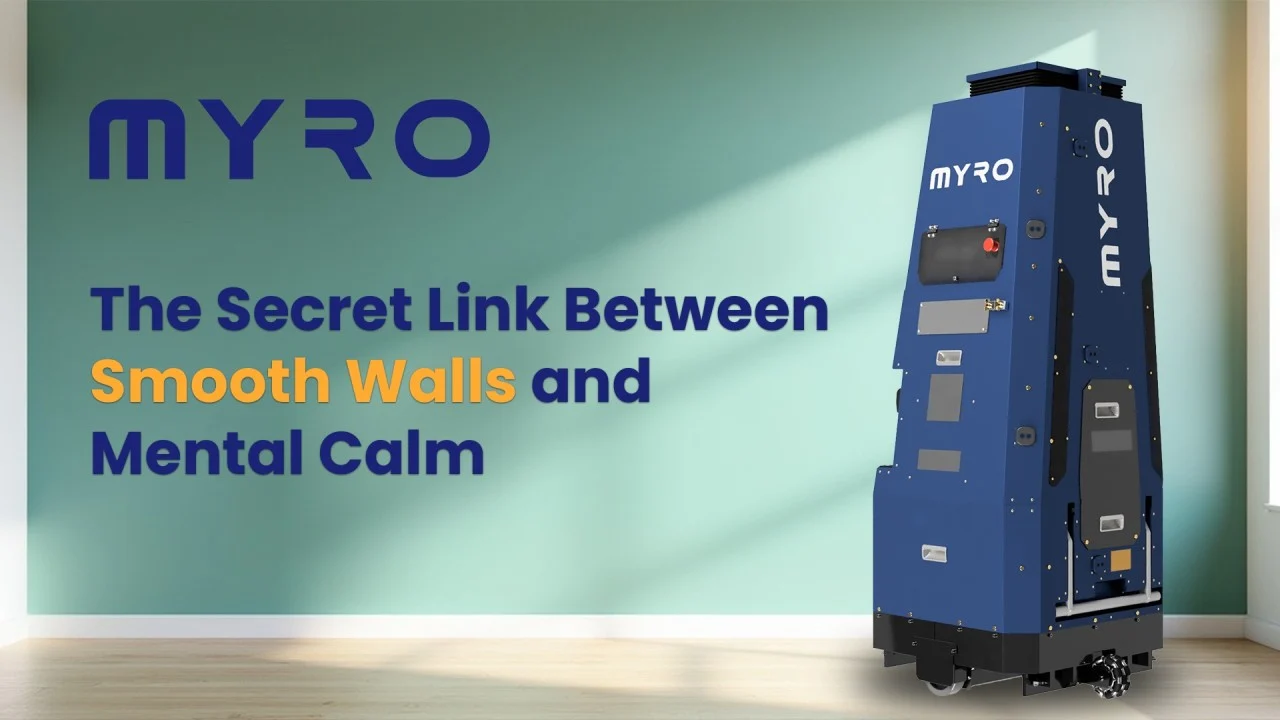
Of course, creating perfectly smooth walls is easier said than done. Traditional painting methods can leave brush marks, roller streaks, or uneven layers that break the sense of harmony. This is where technology is quietly stepping in. Tools like MYRO, a wall-painting robot, are designed to apply paint with precision and consistency, ensuring the kind of uniform finish that promotes calm environments. The role of such innovation isn’t to replace human creativity but to guarantee that the designer’s vision is delivered exactly as intended.
Everyday Benefits
Think about a hotel room, an office conference hall, or even your living room. When the walls are flawlessly smooth, the space feels polished, intentional, and welcoming. You may not always notice why, but you feel it. The brain relaxes when it doesn’t have to process imperfections, and that sense of ease translates into better focus, better rest, and a better overall experience.
All-in-All
Smooth walls might seem like a small detail, but they are part of a bigger picture—the connection between our environment and our mental well-being. As design and technology continue to evolve, we are beginning to understand how much these details matter.
If you’re looking to create spaces that are not only beautiful but also calming and consistent, precision matters.
Contact us to experience MYRO’s precision and discover how flawless walls can bring peace of mind to every space.