
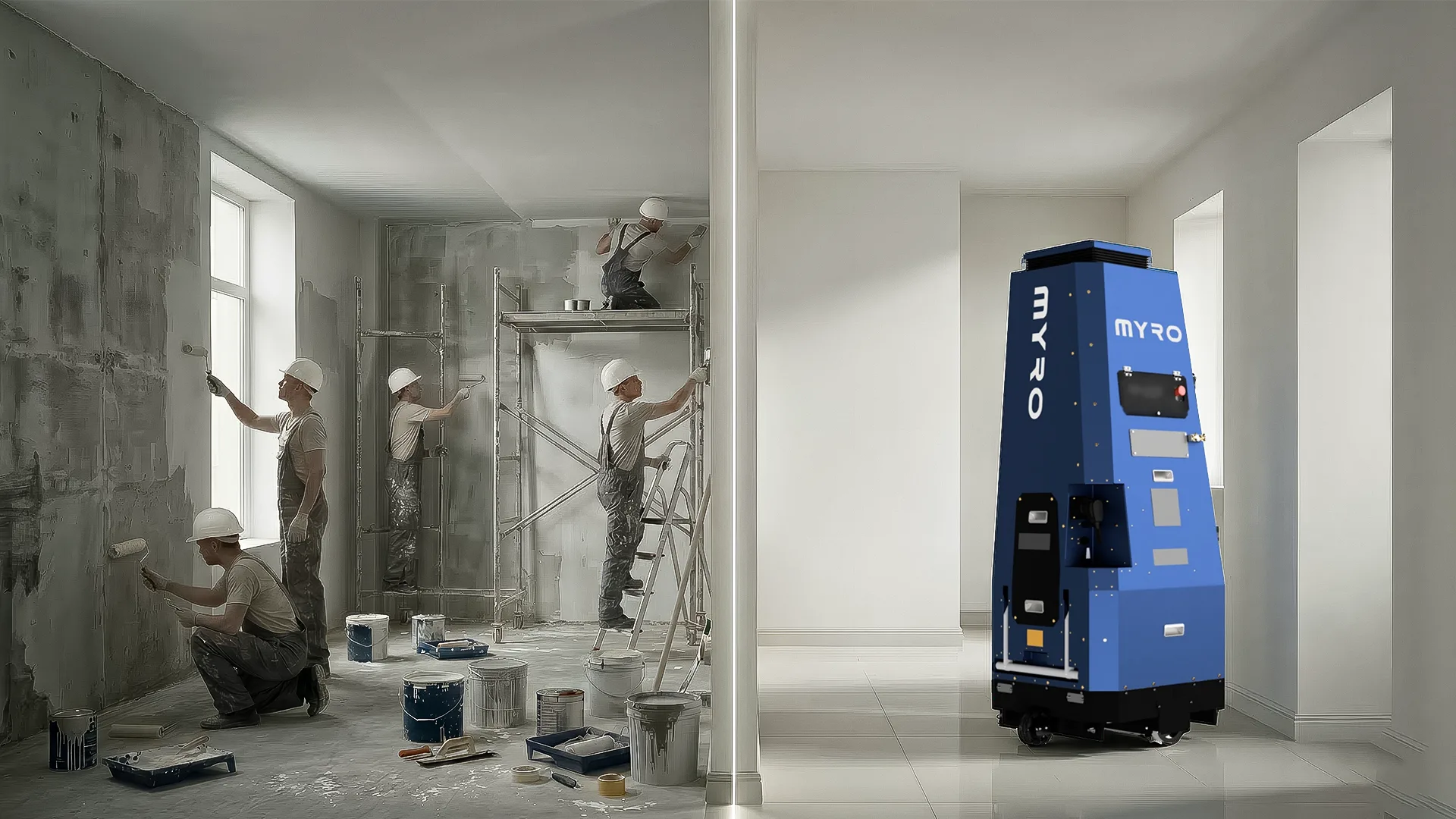

Most painting companies that reach a certain size face the same inflexion point. Projects become larger and more complex. Client expectations shift from execution to coordination. What worked at three crews stops working at twelve. Revenue grows, but so does the operational load, and at some point, the two don’t scale proportionally.
This is where many operators make a critical choice, often without realising it: they either grow bigger or grow stronger.
The distinction matters. And for investors evaluating opportunities in the painting industry, it’s one of the most reliable indicators of long-term sustainability.
Growing Bigger: Volume Without Infrastructure
Growing bigger is straightforward. It means taking on more projects, hiring more crews, and expanding into new sites or regions. It’s the default trajectory for any capable painting business with decent client relationships and enough working capital to float labour costs.
On paper, it looks like progress. Revenue increases. The company becomes more visible in the market. Clients start associating the brand with scale, which can lead to larger contracts and higher-value work.
But operationally, growing bigger without the right foundation creates compounding pressure.
More crews mean more site coordination. More projects mean more procurement cycles, more schedule dependencies, and more points of failure. Job sites that were once managed by a single foreman now require project managers who may or may not have the systems to track progress, material usage, or crew efficiency in real time.
Communication becomes fragmented. Crews work in silos. Reporting happens retroactively, if at all. Issues surface late, often after they’ve already impacted timelines or budgets. Rework becomes more frequent. Client satisfaction starts to vary unpredictably across projects, even when the quality of the paint work itself is consistent.
The business is bigger. But it’s not necessarily more capable.
Growing Stronger: Building Operational Resilience
Growing stronger looks different. It’s less about volume and more about repeatability. It’s the difference between managing ten projects reactively and executing ten projects with predictable outcomes.
Operationally strong painting companies build systems that allow them to absorb complexity without breaking. They standardise how jobs are scoped, how materials are ordered, how crews are deployed, and how progress is tracked. They create processes that work regardless of who’s on site or which client is involved.
This doesn’t mean rigidity. It means coordination discipline.
It means knowing, at any given moment, where every crew is, what they’re working on, and whether they’re on schedule. It means having visibility into material consumption so procurement doesn’t become a bottleneck. It means tracking labour hours in a way that allows for accurate job costing, not just retrospective guesswork.
Execution visibility is the key differentiator. Strong companies can answer operational questions in real time: Is this project trending over budget? Are we on pace to finish by the committed date? Do we have the right crew composition for the next phase?
When these systems are in place, growth doesn’t create chaos. It becomes manageable. The company can take on larger projects without proportionally increasing risk. It can scale crews without losing control. It can enter new markets with confidence that execution won’t degrade.
Operationally strong businesses also absorb setbacks better. Delays, material shortages, crew turnover- these things still happen. But they don’t cascade into larger failures because the underlying structure is resilient.
Why This Matters to Investors
For strategic industry investors, the difference between bigger and stronger is the difference between speculation and durability.
Painting companies that grow bigger without operational depth are high-risk. They may generate revenue, but their ability to deliver predictable outcomes is inconsistent. Margins fluctuate. Client retention becomes harder to maintain. Growth requires constant capital injection because inefficiencies compound at scale.
Operationally strong companies, by contrast, offer predictability. When systems are in place, outcomes become more consistent. Projects finish on time. Budgets hold. Rework decreases. Client satisfaction stabilises across the portfolio.
This translates directly into capital efficiency. A company with strong execution control can take on more work without proportionally increasing overhead. It can deploy crews more effectively, reduce material waste, and avoid the costly cycle of reactive problem-solving that plagues operationally weak businesses.
It also reduces downside risk. In a sector where margins are often tight and project timelines are unforgiving, the ability to execute consistently is a form of risk mitigation. Investors aren’t just betting on growth; they’re backing a company that can sustain performance across cycles.
And perhaps most importantly, operational strength creates long-term sustainability. The painting industry is competitive, but it’s not winner-take-all. Companies that can execute reliably, scale intelligently, and maintain quality across projects build reputations that compound over time. They become the contractors that large clients return to, not because of price, but because of trust.
Where Myro Fits
Myro was built around this distinction. It’s not a tool for managing more projects; it’s a platform for executing them predictably. The focus has always been on coordination, discipline and execution visibility, not volume for its own sake.
The company doesn’t position itself as a growth accelerant. It positions itself as operational infrastructure for painting businesses that understand the difference between scaling revenue and scaling capability.
Durability Over Visibility
In an industry where growth is often mistaken for strength, the quieter metric is resilience. Can the business execute when things go wrong? Can it maintain quality as it scales? Can it deliver predictable outcomes under pressure?
These aren’t glamorous questions. But they’re the ones that determine which painting companies last, and which ones simply get larger until they collapse under their own operational weight.
For investors, the answer to those questions is worth more than revenue projections. It’s the foundation of everything that comes after.