
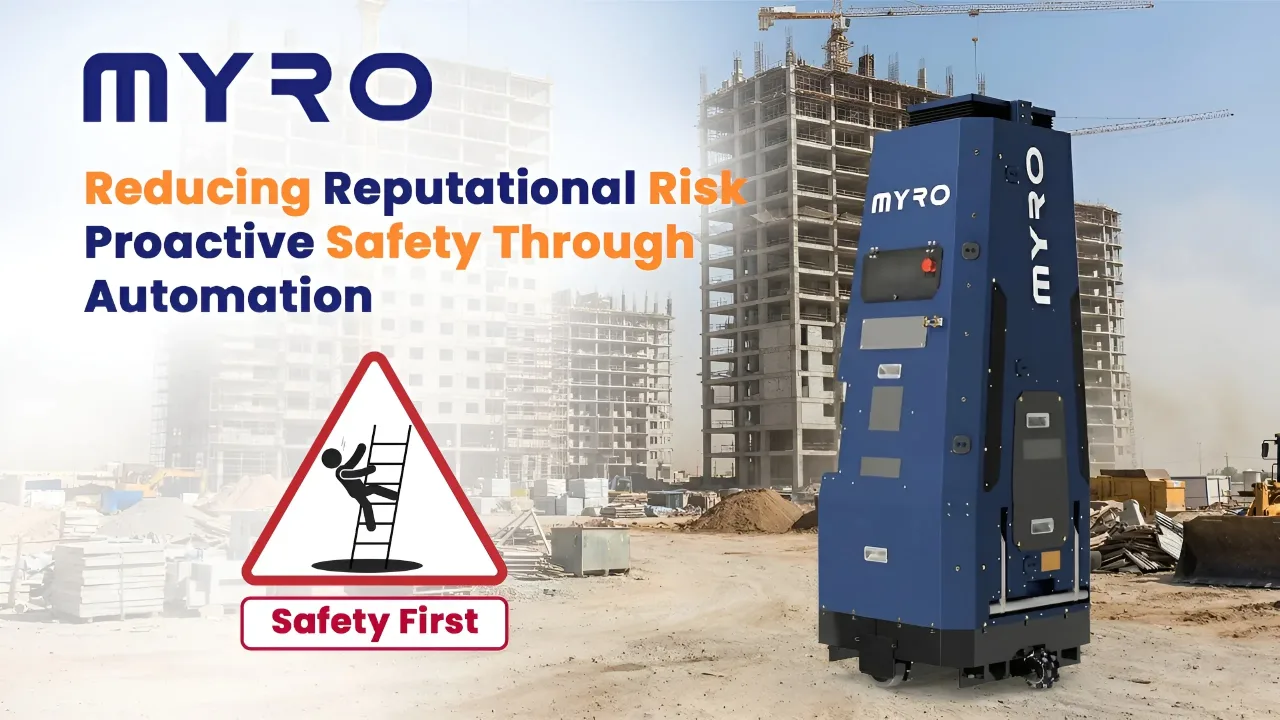

In today’s construction industry, a single workplace accident can devastate more than just the individuals involved. Companies face massive financial liabilities, regulatory scrutiny, project delays, and perhaps most damaging of all, irreparable harm to their reputation. In an era where information spreads instantly through social media and news outlets, safety incidents become public relations crises that can cost companies contracts, client relationships, and years of carefully built credibility.
For construction firms serious about protecting their brand while genuinely improving worker safety, MYRO offers a proactive approach that eliminates entire categories of risk that have plagued the painting industry for decades.
The True Cost of Construction Accidents
Construction consistently ranks as one of the most dangerous industries globally, accounting for approximately one in five workplace fatalities. Falls alone represent 31-47% of all construction deaths, with painters particularly vulnerable when working from ladders, scaffolding, or elevated platforms. In the UAE, falls from heights, contact with sharp edges, and heat-related incidents account for the majority of workplace injuries.
The financial impact is staggering. Workers’ compensation costs in the construction industry exceed billions annually, with the average fatality costing approximately AED 5 million when accounting for direct expenses, legal fees, regulatory fines, and productivity losses. But these figures still underestimate the actual cost because they don’t capture reputational damage.
When a painting-related accident occurs on your project, details spread across social media within hours. Local news outlets cover the story. Regulatory agencies launch investigations. Your company name becomes associated with worker injury, regardless of your historical safety record. Existing clients question their relationships. Potential clients eliminate you from future bids. Insurance premiums increase substantially. A single serious incident can disqualify your firm from prestigious projects worth millions.
Eliminating Risk Through Intelligent Automation
MYRO fundamentally changes the safety equation by eliminating entire categories of hazards rather than just reducing them. Falls from elevation represent the most deadly risk in painting operations. MYRO operates on ground level, moving autonomously across floor surfaces while painting walls from floor to ceiling. There are no ladders to fall from, no scaffolding to collapse, no elevated platforms to create fall hazards.
The robot comes equipped with sophisticated safety features, including emergency stop sensors, collision detection, and obstacle detection systems. If MYRO encounters unexpected obstacles or conditions, it stops automatically, preventing accidents before they occur. Human operators can trigger emergency stops instantly if any concerns arise. These safety systems mean that, even in unlikely events, no one is at risk of falling, being struck by equipment, or suffering injury.
Protecting Workers from Invisible Dangers
Not all workplace hazards are as obvious as falls. Traditional painting involves hours of repetitive motion, standing, reaching, and working in awkward positions. Over time, these demands cause musculoskeletal disorders that plague experienced painters. MYRO eliminates these repetitive strain risks entirely by handling the physically demanding wall coverage while human workers supervise operations and manage quality control.
In the UAE’s extreme climate, heat exhaustion poses serious risks, particularly during summer months when temperatures exceed 45°C. Workers painting in hot, poorly ventilated spaces face genuine danger. MYRO operates continuously in hot conditions without risk, while human supervisors can work from cooler, climate-controlled environments, monitoring operations remotely through the robot’s web-based control system accessible from any device.
Chemical exposure represents another chronic concern. Paint fumes, solvents, and airborne particles create respiratory risks that accumulate over careers. By reducing the number of workers directly exposed to painting environments and shortening exposure duration, MYRO significantly decreases cumulative chemical exposure across your workforce.
The 24-Hour Safety Advantage
One of MYRO’s most underappreciated safety benefits comes from its ability to operate around the clock without fatigue. Human workers tire, and fatigue dramatically increases accident risk. Attention wanes, reaction times slow, and judgment deteriorates as shifts extend, particularly during night work or extended hours.
Contractors facing tight schedules sometimes push workers into overtime or night shifts that compromise safety. MYRO eliminates this dilemma. The robot maintains consistent, safe operation for 24 hours without declining performance. Need to complete urgent work? MYRO handles it safely at any hour without pushing human workers past safe limits.
The robot’s consistent 100 square meters per hour productivity means projects finish 60% faster than traditional methods, reducing overall exposure time for everyone involved. Shorter project durations mean fewer days workers spend on site and fewer opportunities for any incidents to occur.
Building a Safety-First Reputation
Companies that adopt MYRO aren’t just improving safety metrics; they’re demonstrating commitment to worker protection that clients, regulators, and the public notice. When you bid on projects, you can honestly state that your painting operations eliminate fall risks, reduce heat exposure, and minimise repetitive strain injuries through automation.
This isn’t marketing spin, it’s verifiable reality. Your safety statistics improve measurably. Workers’ compensation claims decline. Regulatory compliance becomes easier because you’ve engineered out major hazard categories. Major developers and clients increasingly value contractors who prioritise safety innovation. Projects like Emaar’s Forte development in Downtown Dubai have already trusted MYRO to deliver safe, efficient painting operations throughout luxury residential spaces.
Proactive Protection vs Reactive Response
Traditional safety management focuses heavily on reactive measures: investigating accidents after they occur, implementing corrective actions following incidents, and responding to regulatory citations. MYRO represents proactive safety management, eliminating hazards before anyone gets hurt. Instead of training workers to safely use ladders, you eliminate ladders entirely from painting operations. Instead of monitoring for heat stress symptoms, you remove workers from hot environments.
This proactive approach has powerful secondary benefits. Worker morale improves when employees see genuine investment in their safety beyond compliance requirements. Recruitment becomes easier when your company earns a reputation as a safety leader. Retention improves because workers prefer employers who protect them through innovation rather than just policy.
The Competitive Advantage of Safety
In markets where multiple qualified contractors compete for premium projects, safety records are increasingly differentiating factors. Clients want partners who will deliver quality results without incidents that create liability, delays, or negative publicity. Your ability to complete painting operations with minimal safety risk becomes a competitive advantage in bidding, client relationships, and brand reputation.
While competitors still rely on traditional methods with inherent hazards, you’ve adopted technology that fundamentally improves your risk profile. This distinction matters to sophisticated clients who evaluate contractors holistically, not just on price. Companies that lead in safety innovation position themselves as industry leaders, attracting better clients, more talented workers, and greater respect from peers and regulators.
Protecting What Matters Most
Safety isn’t just about avoiding accidents or protecting reputation, though both are important. It’s about the fundamental responsibility companies have to workers who trust them with their well-being. MYRO doesn’t solve every construction safety challenge, but it eliminates major risk categories in painting operations while simultaneously improving productivity, quality, and cost efficiency.
The question isn’t whether your company will eventually adopt safer painting methods. The question is whether you’ll lead this transition, enjoying the competitive advantages and reputational benefits that come with early adoption, or follow reluctantly after incidents that could have been prevented force your hand. Companies that choose proactive safety through intelligent automation protect their most valuable assets: their people and their reputation.
Disclaimer: This article discusses the general safety benefits of robotic painting technology. Actual safety improvements will vary based on specific site conditions, operational practices, and implementation approaches. MYRO should be operated in accordance with the manufacturer’s guidelines and local safety regulations. For detailed information about MYRO’s safety features and proper operational procedures, please contact MYRO directly.