

Construction Robotics · Investor Perspective · Operational Intelligence
There is a moment on every large construction project when the schedule stops being a plan and starts being a problem.
It rarely announces itself. It arrives quietly, in the gap between what was promised on paper and what the site can actually deliver in practice. And more often than not, the finishing phase is where that gap becomes impossible to ignore.
Painting. Surface coating. The work that has to happen before anything else can follow. The work that is almost always last in the sequence, which means it carries every delay that came before it, and is expected to absorb them without complaint.
It is also the work most dependent on human availability. And human availability, as every site manager knows, is the least reliable variable on any project.
The Rhythm That Breaks Every Schedule
Construction sites have a rhythm. Work starts. Work stops. The day ends, the crew leaves, and the site goes quiet. On weekdays, this is predictable. On weekends, it is almost total. On public holidays, on tight-weather days, on days when half the crew calls in unavailable, the rhythm becomes a full stop.
For most trades, this is manageable. For finishing work, it is a compounded problem.
Surface coating is not a task you can pause and resume without consequence. Conditions shift between sessions. Temperature and humidity change the behaviour of materials. Surfaces that were prepared and ready sit exposed longer than intended. The next application goes on differently from the last. What was designed as a controlled, sequential process becomes a series of disconnected attempts, each one requiring reassessment, adjustment, and sometimes correction.
None of this appears as a line item in the project plan. But it shows up everywhere else: in rework, in inspection failures, in the quiet acknowledgement between trades that the finishing phase ran longer than it should have.
The rhythm of stopping is not a minor inconvenience. It is a structural inefficiency that repeats itself on every project, at every scale, in every market.
Weekends Offer Rest, But They Can Also Slow Down Progress
Ask any project manager running a fast-track programme what their single most frustrating constraint is, and the answer almost always comes back to the same place: time that exists on the calendar but cannot be used.
Forty-eight hours of the weekend. Sitting. Available. Unused.
Not because no one wants the work done. Not because the surfaces aren’t ready. But because the labour model that construction runs on is built around a five-day week, and extending beyond it is expensive, logistically difficult, and often simply not possible given the availability of experienced finishing crews at short notice.
This is the weekend problem. It is not dramatic. It does not cause project collapses. But it silently absorbs the schedule buffer that every programme needs, and once that buffer is gone, every subsequent delay hits the completion date directly.
In high-pressure commercial projects, in fast-track industrial builds, in any development where the downstream occupancy timeline is fixed and non-negotiable, this is not a background inconvenience. It is a live operational risk. And it is one that the industry has normalised to the point of invisibility.
The site does not need to rest. The model that runs it does. That distinction is where the opportunity lives.
Continuous Operation Is Not a Feature; It Is a Different Model
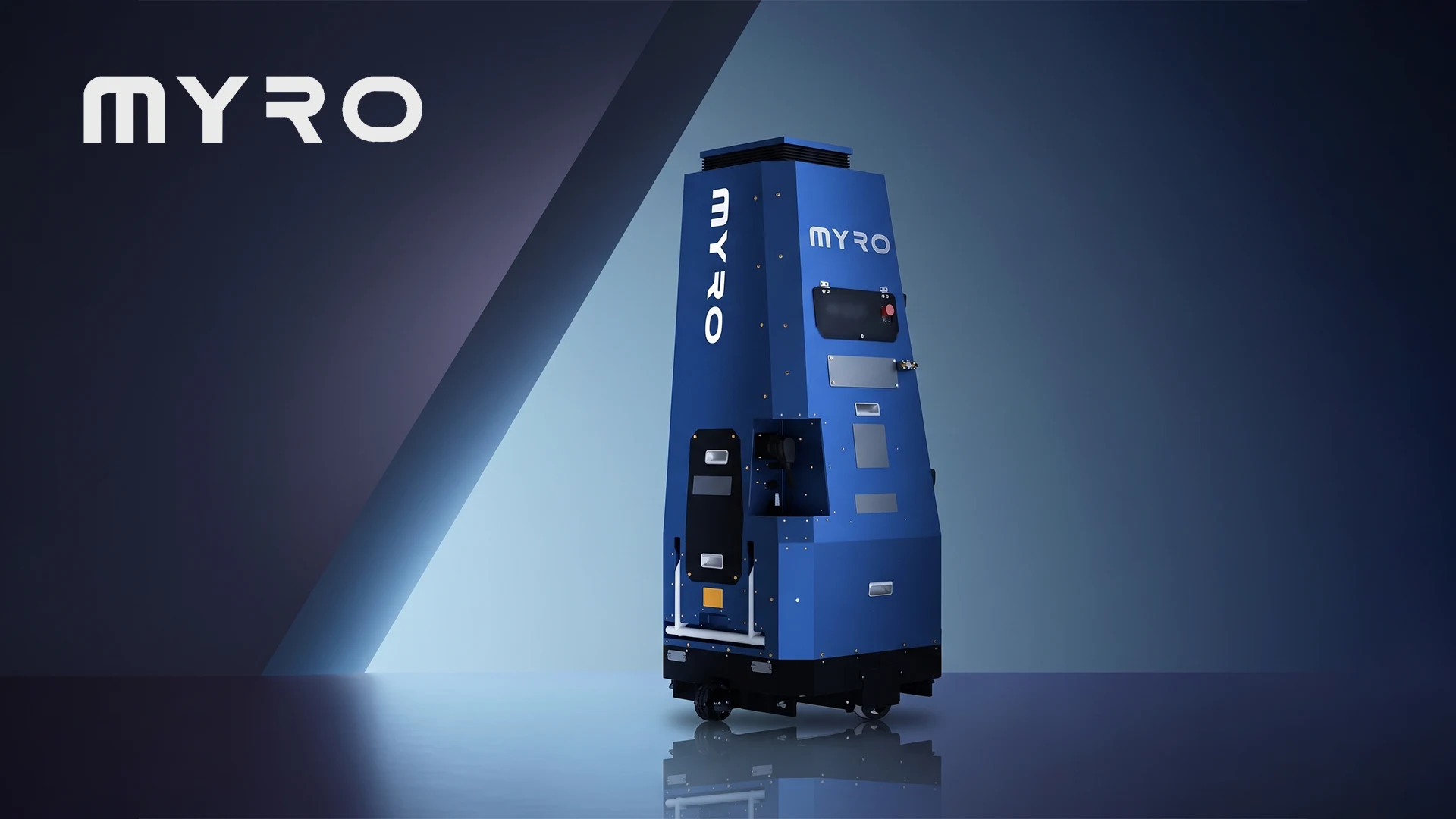
When a robotic system moves through a site overnight, over a weekend, across a holiday window, it is not simply adding hours to the working day. It is replacing a variable, interrupt-driven process with a stable, continuous one.
The difference is not primarily about speed, though speed follows. It is about what becomes predictable when the process no longer stops.
Sequencing locks in. When a downstream trade can be told, with genuine confidence, that the surface will be complete and ready at a specific time, not “probably by the end of the week” but precisely, reliably, on schedule, the entire programme tightens. Trades can mobilise accurately. Overlaps can be planned with real data rather than optimistic estimates. The cascade of delays that flows from one phase running late into the next simply does not start.
Output becomes auditable. A system that operates continuously generates a consistent, measurable record of what was done, when, and under what conditions. That data does not exist in manual finishing work. It cannot, because the process is too fragmented, too dependent on individual execution, too variable in its conditions to produce a clean operational record. Continuous robotic operation, by contrast, produces exactly that. Every surface treated. Every pass logged. Every condition is recorded.
Quality stops being an outcome and starts being a specification. When the application method, speed, distance, and coverage are held constant across every hour of operation, regardless of shift fatigue, time of day, or crew composition, the result is not better-than-average quality. It is of consistent quality. The same standard at hour one and hour fourteen. The same standard on Monday and on Saturday night.
This is what changes when the model changes. Not just the pace. The entire reliability structure of the finishing phase.
What Tight Programmes Expose in Painting Projects
Normal projects hide inefficiency. There is enough schedule buffer, enough tolerance in the programme, enough flexibility in sequencing that the system’s weaknesses can be absorbed before they become visible.
Tight-programme projects strip all of that away.
When a fast-track commercial build is running phases in parallel, when structural work is still active on upper floors while finishing begins on lower ones, when the handover date is contractually fixed and financially significant, there is no room for a finishing crew that cannot mobilise on Sunday, or a painting phase that runs three days long because conditions varied and quality had to be redone.
These are the projects where operational reliability stops being a preference and becomes a prerequisite.
And these are the projects where early adopters of continuous robotic finishing are demonstrating something that matters far beyond a single site: a finishing process that does not bend to the pressures that manual processes bend to. That does not slow down when the programme is most compressed. That does not require a conversation about weekend rates or overtime availability when the schedule is already tight.
The value shows up first in the hardest conditions. That is always where real operational advantages reveal themselves.
The Investor Lens: Backing Consistency, Not Just Capability
Experienced early-stage investors in industrial and construction technology are not primarily evaluating what a system can do. They are evaluating what it removes.
What continuous-operation robotics removes from finishing work is variability. And variability, in the language of investment analysis, is risk. Operational risk. Delivery risk. Reputational risk. The risk that a business built on completing projects on time cannot actually guarantee on-time completion because one of its core processes depends on labour availability, which it cannot fully control.
A finishing operation built on continuous robotic deployment changes the risk profile of the business that runs it. Delivery commitments become real commitments, not estimates with contingency baked in. Programme adherence becomes a differentiator that clients recognise and price accordingly. And the business itself becomes something that can scale, because the output does not degrade as the volume grows.
This is the case that early backers are making. Not that the technology is impressive, though it often is. But the problem it solves is structural, persistent, and growing, and the business model it enables is one that the industry has not previously had access to.
In construction, reliability has always been promised. It has rarely been engineered. Robotics that operate without the constraints of the human working pattern is one of the clearest paths to engineering it.
Where This Leads
The finishing phase of construction will not look the same in ten years as it does today.
The labour trends point one way. The programme pressures point one way. The client expectations point one direction. And the performance gap between operations that have embedded continuous robotic systems and those that have not will widen, not gradually, but at the pace of every project where the difference becomes visible.
The contractors who move first do not simply win individual projects. They establish a delivery standard that becomes the reference point. Their competitors do not catch up by working harder within the existing model. They catch up by adopting the same tools, by which point the first movers have compounded their advantage across dozens of projects and built a track record that is genuinely difficult to replicate quickly.
Early backers understand this dynamic. They have seen it in logistics, in manufacturing, in every sector where operational consistency became a structural advantage rather than a temporary edge.
Construction is next. The finishing phase is where the proof is already accumulating. And the system driving it does not stop for the weekend.
Construction Robotics Intelligence · Operational Analysis Series · All commentary reflects generalised industry trends and does not constitute financial or investment advice.