
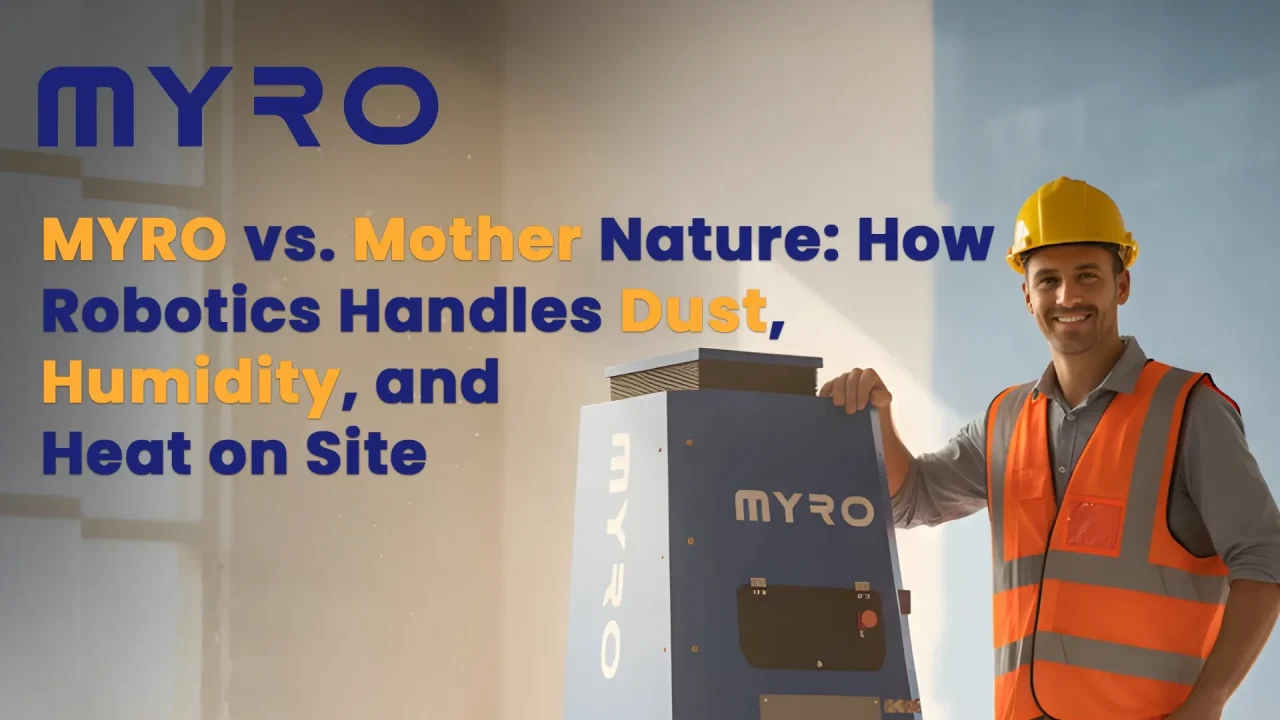

Painting may seem like the final touch on a construction project, but in reality, it is one of the most vulnerable stages of the process. Unlike steel or concrete, paint is highly sensitive to its environment. Dust particles, shifting humidity levels, and temperature extremes can all affect the quality of a finish. For decades, these conditions have made painting one of the most unpredictable tasks on a site.
The Challenge of Dust
Dust is one of the most common issues on construction projects. Whether from sanding, cutting, or simply the natural environment, fine particles can settle on freshly painted surfaces. This creates blemishes, rough textures, and in some cases, weakens the bond between the paint and the wall. Manual painters often attempt to work around the problem by cleaning surfaces repeatedly or stopping work altogether until conditions improve. Both options lead to delays.
Robotics reduces this risk by ensuring surfaces are consistently cleaned and coated with minimal delay between preparation and painting. Automated timing means there is a lower chance for dust to settle, resulting in a smoother and more reliable finish.
The Role of Humidity
Humidity plays an equally disruptive role. When the moisture in the air is too high, paint takes longer to dry, leaving it vulnerable to drips, streaks, and uneven absorption. On the other hand, when humidity is too low, paint can dry too quickly, resulting in visible lap marks and poor adhesion. For a painter, balancing the timing of application against these changing conditions is often a matter of experience and guesswork.
Robotic painting systems help counter these issues by delivering paint at controlled thickness and speed. This creates uniform layers that are less vulnerable to streaking or uneven drying, even when conditions fluctuate. The result is consistency that is very difficult to achieve manually.
Heat and Its Impact
Temperature extremes add yet another layer of complexity. High heat can cause paint to blister or crack as it dries too fast on the surface while remaining wet underneath. Cold conditions can make paint thicker and harder to spread evenly. These shifts not only affect the immediate appearance but also reduce the long-term durability of the finish.
By maintaining steady spray pressure and distance, robotics helps paint cure more evenly across the wall, regardless of ambient temperature. This precision reduces the risk of blistering, cracking, or poor adhesion caused by extreme heat or cold.
A Shift in Standards
The larger significance of this approach is not just in smoother walls but in what it represents for construction as a whole. For years, environmental conditions were seen as unavoidable challenges that dictated project schedules. Robotics changes that equation. By delivering uniform quality despite dust, humidity, or heat, systems like MYRO turn painting from a variable process into a reliable one.
Looking Ahead
The environment has always shaped construction, but the balance is shifting. Robotics is enabling a level of control that was once considered impossible on-site. The result is not only more consistent finishes but also faster timelines, reduced material waste, and higher confidence in outcomes.
Painting may remain at the mercy of nature in some respects, but with robotics, the margin of unpredictability grows smaller each year. As technology continues to evolve, it is setting new benchmarks for what quality and reliability look like in construction.