
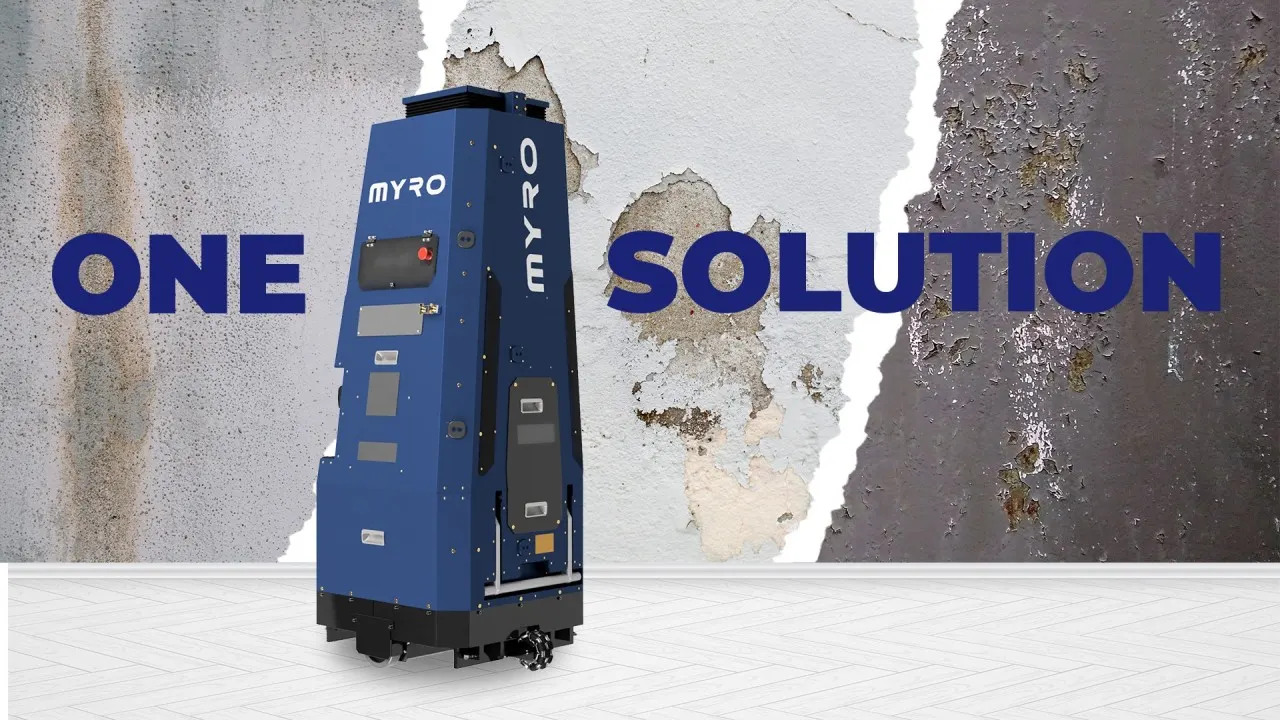

Anyone who has delivered a large paint job knows the quiet truth: the most significant variable isn’t always the crew or the coating - it’s the environment. Moisture in the substrate, high ambient heat, or lingering humidity can affect adhesion, drying time, and the final appearance. This article explains why those factors matter and how a disciplined workflow - supported by MYRO’s repeatability
. helps teams achieve consistent results without guesswork or hype.
Why climate conditions matter (the basics everyone agrees on)
- Moisture in the surface or the air can interfere with adhesion and may lead to premature defects.
- Heat can accelerate solvent or water evaporation, which may affect how a film levels and cures.
- Humidity typically slows drying and curing and can influence how dust or airborne particles settle.
These are well-understood coating principles and are usually addressed directly in paint manufacturers’ technical data sheets (TDS). The most reliable approach is simple: measure conditions, follow the TDS, and adjust the plan.
A practical, workflow
High-quality painting - manual or robotic - tends to follow the same responsible steps:
- Read the TDS for the specific coating system (primer, intermediate, top coat).
- Measure the site with standard tools such as a hygrometer (temperature/RH), a surface thermometer or IR reader, and a moisture meter for substrates where relevant.
- Plan the window (time of day/sequence of areas) to stay within the TDS limits.
- Run a small test patch to confirm appearance and drying behaviour.
- Apply consistently and inspect between coats.
- Document what was done (settings, tools, timings, observations).
Where MYRO helps - without pretending the weather goes away
MYRO doesn’t change physics, and it doesn’t replace sensible site practice. What it does do is remove a lot of human variability from the parts we can control.
- **Repeatable application parameters
**MYRO keeps motion, overlap, travel speed and standoff distance consistent from the first square metre to the last. That repeatability supports an even film build and a uniform appearance when the coating is applied within its recommended environmental window. - **Operator-led configuration
**Conditions vary across sites and seasons. MYRO allows operators to set and save application parameters (e.g., pattern, speed, passes) appropriate to the coating and the plan agreed with the paint supplier. If the team moves from a cooler core to a warmer façade, operators can update parameters accordingly. - **Zone-by-zone discipline
**Large projects often have “micro-climates” (sun-exposed zones vs. shaded interiors). MYRO’s digital path planning helps teams divide work into zones and apply coats consistently within each zone, rather than drifting in and out of changing conditions. - **Record-keeping that aids improvement
**MYRO can log application settings and job sequences. Paired with the site crew’s environmental notes (temperature/RH/surface moisture readings and photos), this creates a simple continuous-improvement loop for future jobs.
Important: We recommend pairing MYRO with standard site instruments (hygrometer, thermometer/IR, moisture meter) and following the paint manufacturer’s TDS. If readings are outside the recommended range, reschedule, adjust the site setup (ventilation/shading), or conduct another test patch before proceeding.
Practical tips for climate-aware painting with MYRO
- Agree on the specification early. Confirm products, coats, and target appearance with the coating supplier and client.
- Measure before you start. Temperature, relative humidity, and - where relevant - substrate moisture.
- Choose your window. Early mornings or controlled interiors often give steadier conditions.
- Do a test patch. Check flow, levelling, and touch-dry times match expectations.
- Set MYRO once per zone. Lock in a consistent speed, overlap and standoff for each area; avoid mid-zone tinkering unless the TDS or inspection suggests otherwise.
- Inspect, then proceed. A quick torchlight or raking-light review between coats catches issues early.
- Document everything. Keep a simple log of readings, parameters, timings and photos. It pays off.
Health, safety and indoor quality - set fair expectations
A consistent, controlled application can support cleaner sites by avoiding unnecessary rework and minimising avoidable overspray or mess. That said, indoor air quality depends on the coating chemistry, ventilation, and good site practice. Use low-VOC specifications where appropriate, ventilate as per the TDS, and schedule handover only once the space meets your project’s acceptance criteria. MYRO helps by enabling operators to supervise at a distance and to work methodically, but proper ventilation and PPE policies still apply.
The bottom line
Climate variables will always be part of painting. The responsible approach is to measure them, plan around them, and apply the coating consistently. MYRO’s value is in making the controllable parts genuinely repeatable: steady motion, precise overlap, and documented settings - all aligned with the coating supplier’s guidance and your site measurements.
That combination - sound fundamentals + repeatable application - is what turns real-world conditions into reliable results.