
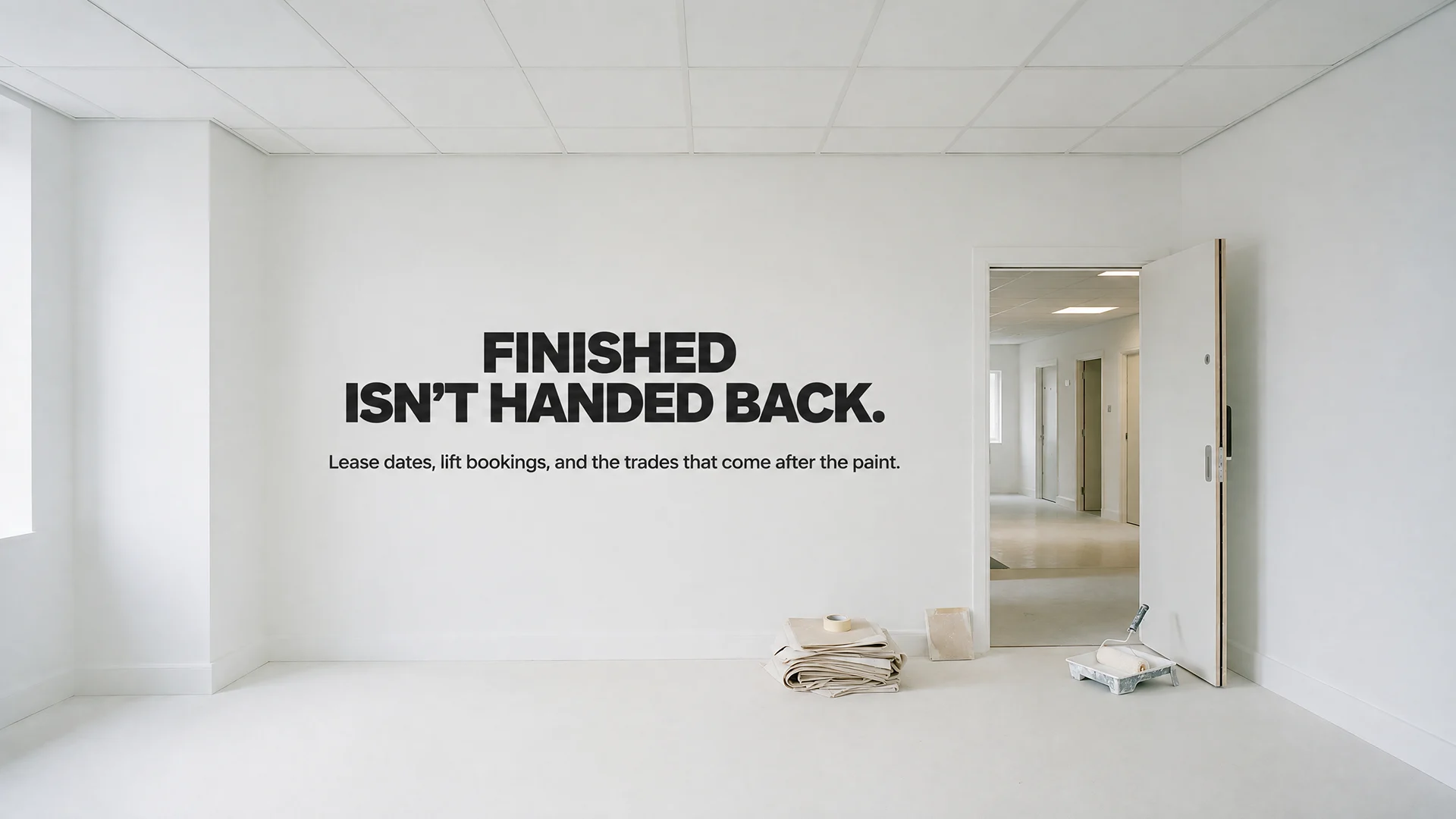

A tenant fit-out can be down to the final coat and still have no reliable move-in date. One wall is waiting for an electrical change. The service lift can be booked for only part of the shift. The property manager wants to know when the air-conditioning system can return to normal operation. All three questions affect when the suite can be handed back.
For a landlord, the useful painting timeline begins when the walls are ready and ends when the suite is released. A fast pass through an open room helps. The rest of the job determines how much of that time becomes a shorter vacancy.
Find the lease milestone the work can actually move
Confirm the dates that matter in the lease and handover plan, such as access for the tenant’s contractors or commencement of rent. The dates can differ. If base rent commencement moves with delivery, the landlord can estimate the impact of a delay using the daily equivalent rent and the number of days at risk. For example, at a daily equivalent of AED 1,000, three days of delayed billable rent would represent AED 3,000 in deferred or foregone base rent, depending on the contract.
Check whether paint is on the critical path. If data cabling or a separate inspection controls delivery, finishing the walls earlier may create a buffer without advancing the lease milestone. That distinction helps the property team see which schedule improvement can affect the turnover.
Group the suite into workfronts the trades can release
On a second-generation office floor, existing walls may need repairs where furniture, signs or partitions were removed. On a shell fit-out, new partitions might still be waiting for trade work and final preparation. Walk the space before promising an application date, and note where the site can release rooms in groups.
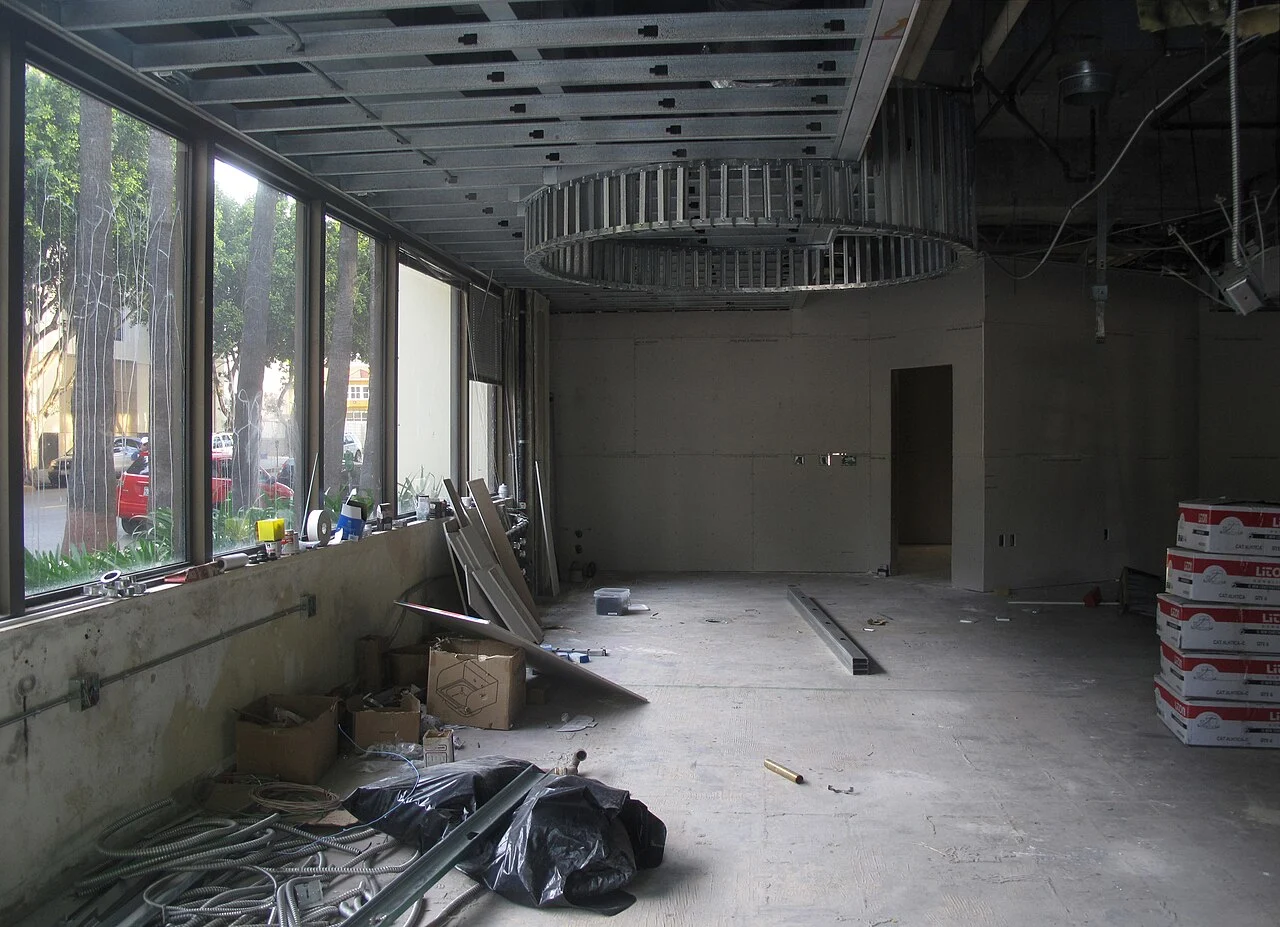
A vacant commercial unit between tenants, with ceiling work and materials still in the space.

Photo by Downtowngal via Wikimedia Commons
· CC BY-SA 3.0.
Hold the final coat in areas another trade still needs to open. Begin with zones where prep is complete, finishes can be protected and the route remains clear. Confirm who releases each room for paint and who checks it before flooring, furniture or IT contractors come back in. MYRO’s commercial painting workflow
Plan access and separation from adjacent occupied space
Book loading, the service lift and material routes with building management. Verify the dimensions and load limits along the actual route before planning a MYRO deployment. Put setup and cleaning locations on the work plan and agree how the coating work will be separated from adjacent tenants.
Coating selection, ventilation, containment and reopening are building and product decisions. Agree on them with facilities before an after-hours shift. Set out who checks the zone after cleaning and when people can return. Where the selected equipment or method does not fit the access rules, keep an approved alternate plan for that area. EPA building air quality guidance
Trial the robotic run with the details included
A group of cleared suites with comparable surfaces is a useful test for robotic interior wall painting. The MYRO operator can program the suitable runs and mark exclusions, while the crew handles masking, selected edges and inspection. Track the time from loading into the zone to the first completed inspection. Keep the periods for drying and any second coat visible on the same schedule.
Suppose a trial shows that rolling the smaller enclosed rooms keeps the corridor clear, while robotic spraying suits the longer open-plan walls. Price and schedule the two methods together. The resulting plan will be more useful to the landlord than a single spray-rate figure covering walls the robot will never paint.
Set a cut-off for tenant changes
Agree on the last decision date for colours, accent walls and late partition moves. Link each decision to the rooms it affects. If the tenant changes a finish in one meeting room after work starts, the team can keep the discussion and any rework there while proceeding in the areas that already have approval.
Note what a late decision does to the lease handover sequence. A change that needs a new sample may bring a consultant or tenant representative back to the building. Book that review with enough time for the coating to dry to the agreed inspection condition. The property manager can then explain whether to release the rest of the suite first or keep the original handback together. Make that decision while there is still time to change the work order and notify the other trades.
Close each zone against the agreed finish
Use a room list that identifies accepted walls, touch-ups and any part of the suite still awaiting a different trade. Check the finish under the intended lights, then confirm protection removal and building management release. If the first suite takes longer than planned, record the reason while the contractor and site manager can still change the next work window. MYRO guide to inspecting painted walls under raking light
Once one suite is complete, review the full turnover with the property manager. Did the last coat use up the available work window, or did the crew finish early and wait for building clearance? If the delay came from the lift booking or the inspection slot, adjust those arrangements for the next suite. Keep the painting plan in step with those changes so any time gained on the walls carries through to handback.
A faster turnover comes from putting those steps in the right order. Once the team has an accepted suite and knows what it took to get there, the landlord can decide how confidently to bring the same method to the next lease.